
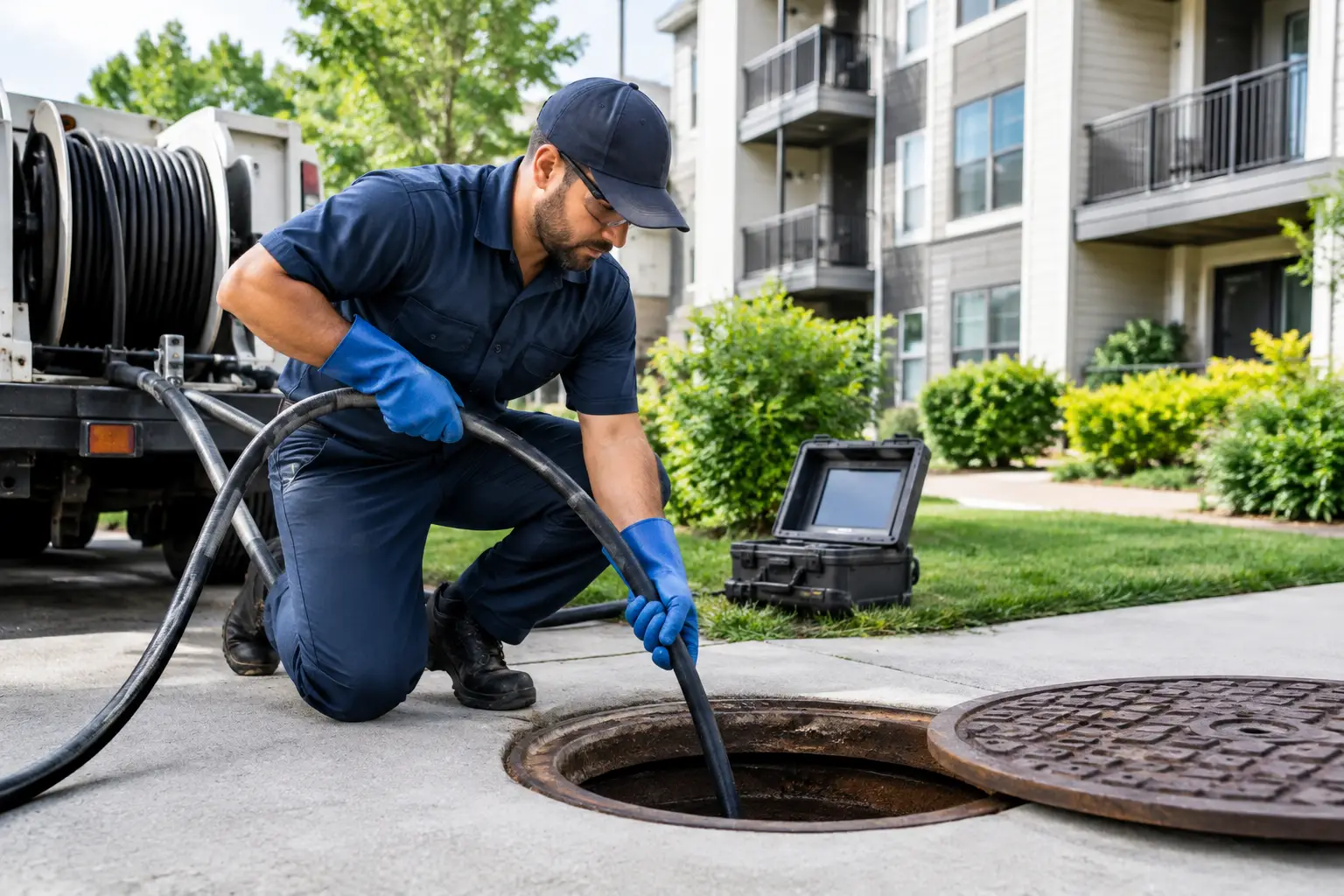
A sewer backup in one apartment rarely stays in one apartment. Water can move through lower-level units, common areas, walls, and flooring before the source is identified. Preventive sewer maintenance for apartments gives property managers a clearer view of what is happening underground and behind walls before a slow drain turns into a resident emergency.
For multifamily properties, the goal is not to inspect pipes for the sake of checking a box. It is to find developing problems early, document their location, and make a targeted repair plan that protects residents, staff, and the property budget. A sewer camera inspection provides the visual evidence needed to do that without starting with unnecessary digging.
Why Apartment Sewer Problems Become Expensive Fast
Apartment buildings place more demand on shared drain and sewer lines than a single-family home. Multiple kitchens, bathrooms, laundry connections, and tenants send wastewater through the same branch lines and main sewer pipes every day. A partial restriction that would cause an occasional slow drain in a home can create repeated backups across several units in a multifamily building.
The hardest part is that the warning signs are often scattered. One resident reports gurgling in a toilet. Another notices a tub draining slowly. The ground-level unit experiences a backup after a busy weekend. Treating each complaint as an isolated clog can lead to repeated service calls while the actual issue – a damaged main line, root intrusion, pipe belly, or separated joint – continues to worsen.
Emergency repairs also carry costs beyond the plumber’s invoice. Property teams may face after-hours calls, sanitation cleanup, temporary loss of use, resident frustration, damaged finishes, and pressure to restore normal operations quickly. Preventive work gives managers more control over when and how a repair happens.
What a Camera Inspection Can Find
A sewer camera travels through accessible plumbing lines and sends back a live view of the pipe interior. This makes hidden conditions visible and helps identify the exact area that needs attention. Instead of guessing whether a recurring backup is caused by tenant use, a clog, or a broken line, the inspection can show what is actually inside the pipe.
Common findings in apartment sewer systems include root intrusion at pipe joints, grease buildup in kitchen lines, wipes and debris lodged in the pipe, cracked or broken sections, offset joints, corrosion, and low areas known as pipe bellies. A belly holds water and waste because the pipe no longer has the slope needed for reliable flow. The line may drain eventually, but it remains vulnerable to repeat blockages.
Camera findings are also useful when a plumbing contractor recommends a major repair. Video documentation helps property managers understand the condition, compare repair options, and confirm that the proposed work matches the problem. Clear evidence keeps maintenance decisions focused and helps avoid paying for excavation or replacement that does not address the real cause.
Building a Preventive Sewer Maintenance Plan for Apartments
The right schedule depends on the building’s age, pipe material, maintenance history, occupancy, landscaping, and past drainage issues. There is no single inspection interval that fits every apartment property. A newer building with no history of backups may need a different approach than an older complex with mature trees and cast-iron sewer lines.
Start by reviewing work orders and resident complaints. Repeated calls from the same building, stack, or lower-floor units should be treated as a pattern, not just a series of small clogs. Note where backups occur, whether they follow heavy rain, and how often drains need to be cleared. Those details help prioritize which lines should be inspected first.
A practical preventive program usually includes scheduled camera inspections of main sewer lines, inspections after significant recurring backups, and documentation following repairs. Main lines deserve particular attention because one failure can affect many residents. High-use areas such as shared laundry rooms, community kitchens, and buildings with frequent turnover may also require closer monitoring.
Use the Findings to Plan, Not Panic
Not every camera finding calls for immediate pipe replacement. Minor scale buildup or an early root intrusion may be manageable with cleaning and a follow-up inspection. A severely offset pipe, persistent belly, or broken section may require a more permanent repair because cleaning alone will not correct the structural issue.
The key is matching the response to the condition. Camera footage can help distinguish a maintenance need from a repair need. That allows the property team to schedule work during a lower-impact window, notify residents properly, and budget for the right solution rather than reacting under pressure during a backup.
Keep Records by Building and Line
Video evidence is most useful when it becomes part of the property’s maintenance record. Save inspection dates, line locations, findings, cleaning history, and repair recommendations. For larger complexes, organize records by building, stack, or sewer segment so new maintenance staff and outside contractors can quickly understand the history.
This documentation can reveal patterns that are easy to miss in individual work orders. If the same line is cleared several times a year, the problem may not be routine use. If root intrusion returns quickly after cleaning, a compromised joint may be allowing roots back into the pipe. Records turn recurring plumbing headaches into actionable information.
When to Schedule a Sewer Camera Inspection
Waiting for a full backup is the most expensive way to learn that a sewer line has a problem. Property managers should consider a camera inspection when residents report recurring slow drains, toilet backups, gurgling fixtures, sewer odors, or water appearing around floor drains. Multiple complaints in the same area are especially worth investigating.
Inspections are also smart before major resurfacing, landscaping, paving, or construction near known sewer routes. If a line is already damaged, heavy equipment or ground disturbance can make the situation worse. When excavation is planned, accurate utility locating and documented pipe conditions help project teams avoid costly surprises.
After hydro jetting or drain cleaning, a camera inspection can confirm whether the line is truly clear and whether a structural defect remains. Cleaning restores flow, but it does not repair a collapsed section, misaligned joint, or pipe belly. Seeing the pipe after the blockage is removed gives a more reliable basis for the next decision.
Avoiding Disruption to Residents
Apartment maintenance always involves balancing necessary work with resident comfort. The advantage of preventive inspection is that it allows property teams to act before wastewater reaches a unit. A camera inspection is generally far less disruptive than emergency excavation, water damage cleanup, or shutting down plumbing after a backup.
Communication still matters. Let residents know when work may affect access to cleanouts, parking areas, or plumbing use. Give clear instructions if a line will be temporarily unavailable, and avoid broad notices when the work is limited to a specific building or stack. Targeted maintenance is easier for residents to accept when they understand it is preventing a larger failure.
For Houston-area apartment properties, heavy rain and shifting soil can add another layer of risk. Drainage conditions, root growth, and aging underground infrastructure can all affect sewer performance. A visual inspection helps separate a simple blockage from a deeper line issue before the next weather event puts additional demand on the system.
Get Clear Evidence Before the Next Backup
A preventive sewer plan works best when it is based on what the pipes are actually showing, not assumptions. AA Camera Inspections uses high-tech camera equipment to locate concealed defects and document pipe conditions so property managers can make informed maintenance and repair decisions.
The most useful time to inspect a sewer line is often when it is still working, just not working quite right. A slow drain, repeat clog, or isolated complaint may be the first visible sign of a larger issue. Addressing it with clear visual evidence can protect your residents, reduce emergency calls, and give your maintenance budget a better chance of staying on track.
