
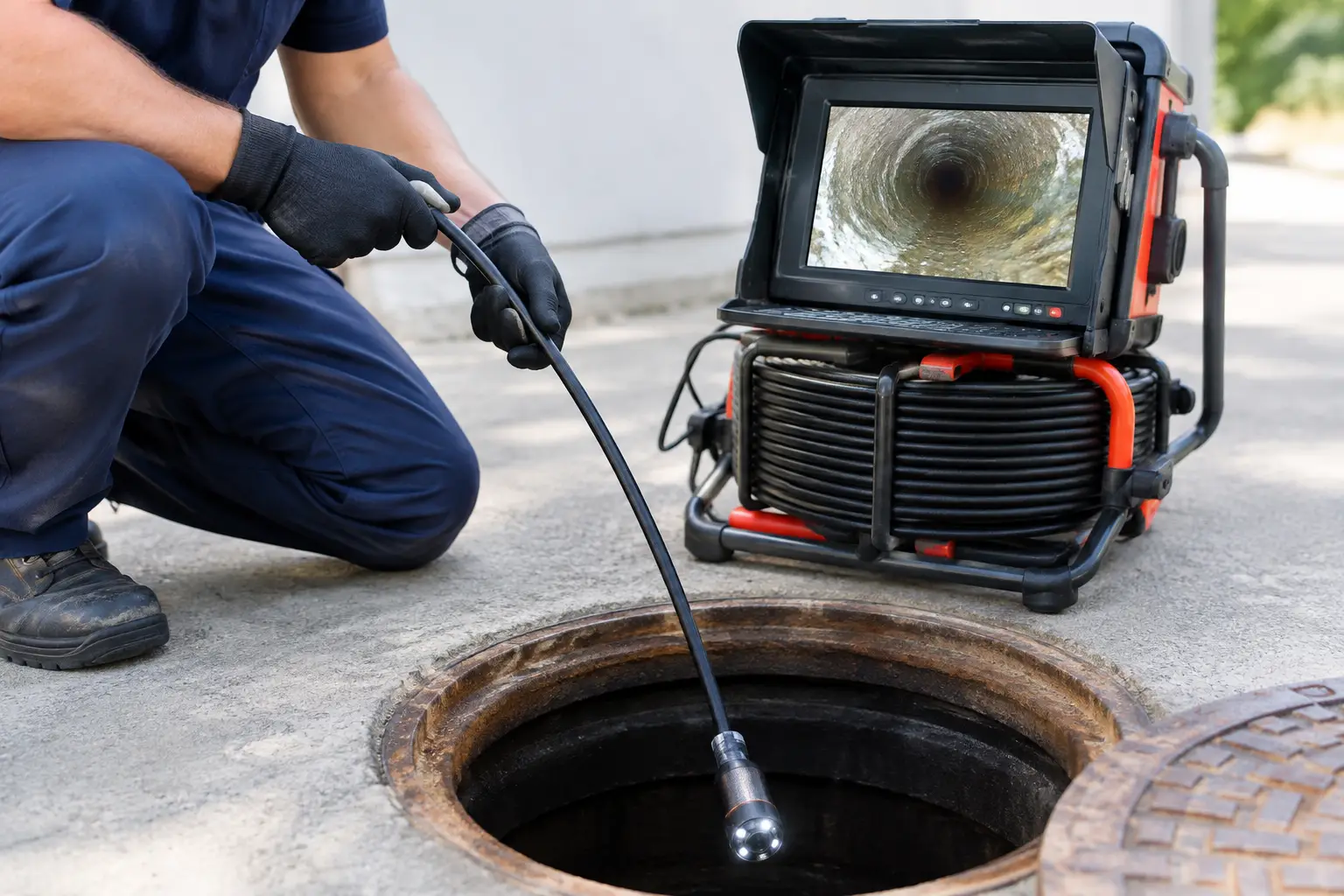
A sewer problem rarely announces itself from the yard. It starts with a toilet that bubbles, a shower that drains slowly, a recurring backup, or a patch of unusually green grass over a buried line. What is a sewer camera inspection? It is a visual inspection of the inside of your sewer or drain pipe using a specialized waterproof camera, giving you clear evidence of what is causing the problem and where it is located.
Rather than guessing where to dig or replacing pipe based only on symptoms, a trained technician guides a camera through an accessible cleanout or drain line. The live video reveals the condition of the pipe from the inside. That means a homeowner, plumber, or property manager can make a repair decision based on what is actually there.
How a sewer camera inspection works
A sewer camera is mounted on the end of a flexible push cable. The camera is designed to travel through underground sewer lines and other accessible plumbing lines while transmitting live video to a monitor above ground. Depending on the pipe layout and access point, the technician may inspect the line from a cleanout, roof vent, floor drain, or another appropriate opening.
As the camera moves through the pipe, the technician watches for changes in flow, visible damage, obstructions, and connection issues. The equipment can help identify the distance to a problem from the entry point. When paired with a surface locator, it can also help pinpoint the approximate location and depth of a buried pipe or defect before excavation begins.
This is why camera inspection is so useful before a major sewer repair. A blockage near the house and a broken line near the property connection can create similar symptoms, but they require very different work. Seeing the line first helps avoid digging in the wrong place.
What a sewer camera inspection can find
A camera does not just confirm that a drain is clogged. It shows the type of issue affecting the line, its severity, and whether the problem appears isolated or part of a larger pipe failure. Common findings include root intrusion, grease buildup, wipes and debris, cracked pipe, separated joints, offsets where sections no longer align, and corrosion in older piping.
Technicians also look for pipe bellies. A belly is a low area in an underground line where wastewater and solids can collect instead of flowing freely. These sections may cause recurring slow drains or backups even after the line has been cleaned. A cleaning may restore flow temporarily, but a camera inspection can show whether a grade issue is still waiting to cause the next problem.
In Houston, shifting soil, heavy rain, mature trees, and aging pipe materials can all affect buried sewer lines. Root growth can enter through small joint gaps and expand over time. Ground movement can create cracks or misaligned connections. A camera gives property owners a practical way to see those hidden conditions without turning the yard, driveway, or slab into a guesswork project.
When should you schedule a sewer camera inspection?
A camera inspection is valuable when there is a clear problem, but it is also useful before a problem becomes an emergency. If your drains have been acting up repeatedly, the most cost-effective next step is often to identify the cause instead of paying for the same clearing service again.
Consider an inspection when you notice four or more of these warning signs:
- Multiple drains are slow or backing up at the same time.
- Toilets bubble when another fixture drains.
- A sewer line has needed repeated snaking or hydro jetting.
- You smell sewer gas indoors or around the yard.
- You are buying an older property or planning a major renovation.
- A plumber recommends repair or replacement but the exact condition of the line is unclear.
For commercial properties, timing matters even more. A blocked or damaged sewer line can affect restrooms, kitchens, tenant spaces, and daily operations. Camera inspections help facility teams document the issue, prioritize repairs, and reduce disruption to customers and employees. They are also useful for restaurants, multifamily properties, retail centers, and office buildings that need preventive maintenance planning rather than surprise shutdowns.
What happens during the inspection?
The process usually begins with identifying the best access point. The technician then feeds the camera into the pipe and records or observes the line as far as the equipment and pipe condition allow. If the line is full of standing water, heavily blocked, or packed with debris, cleaning may be needed before the camera can provide a complete view.
That is an important trade-off. A camera is excellent for diagnosis, but it cannot see through a solid obstruction. In some cases, the first goal is to restore enough flow to inspect beyond the blockage. Once the line is visible, the technician can determine whether the obstruction was a one-time clog or a symptom of roots, a break, a belly, or another underlying problem.
Afterward, you should have clear findings rather than vague language about a possible issue. A useful inspection identifies where the concern is located, what appears to be causing it, and what type of repair or maintenance should be considered. Video documentation can also help when you need to coordinate with a plumber, contractor, seller, buyer, insurer, or property stakeholder.
What a camera inspection does not tell you
A sewer camera inspection is one of the best diagnostic tools for accessible pipe interiors, but it has limits. It does not automatically prove every pipe is leak-free, and it may not show damage hidden behind heavy buildup or standing water. It also cannot always determine the full exterior condition of a pipe, such as soil voids around it, without additional testing or excavation.
The quality of the results depends on access, pipe diameter, line cleanliness, and the experience of the person interpreting the video. A blurry image alone is not the value of the service. The value is knowing whether the image shows harmless residue, a maintenance concern, or a defect that needs targeted repair.
That is also why a camera inspection should not be used to pressure someone into unnecessary replacement. A small amount of root intrusion may call for cleaning and monitoring. A severely separated line with repeated backups may justify repair. The right answer depends on the evidence, the age and material of the pipe, the frequency of symptoms, and how the property is used.
Why a camera inspection can save money
The biggest savings often come from avoiding the wrong repair. Without visual evidence, a contractor may need to work from symptoms alone. That can lead to broader excavation, repeated drain cleaning, or replacing sections that were not actually the source of the failure.
With a clear camera location, repair work can be more targeted. Property owners can compare recommendations with confidence, and plumbers can plan the right equipment, access, and repair method. For construction teams, locating sewer and utility lines before digging can help reduce the risk of costly strikes and project delays.
For a homeowner, this may mean protecting a lawn, driveway, landscaping, or flooring from unnecessary disruption. For a commercial operator, it can mean scheduling corrective work during a lower-impact window instead of dealing with an unexpected closure after a line fails.
Getting ready for a sewer line camera inspection
You usually do not need to do much preparation. Keep the area around accessible cleanouts clear, and let the technician know about recent backups, drain cleaning, remodeling, or prior sewer repairs. If you have an older inspection report or video, it may provide useful context.
Ask what line is being inspected and whether the service includes footage, findings, and locating of a suspected defect. If a repair is recommended, ask what the camera showed that supports it. Clear answers protect your property and help everyone stay focused on the actual condition of the pipe.
Hidden sewer trouble is stressful because you cannot see it. A professional camera inspection changes that. When AA Camera Inspections puts the evidence in front of you, you can move forward with a targeted plan instead of a costly guess.
