
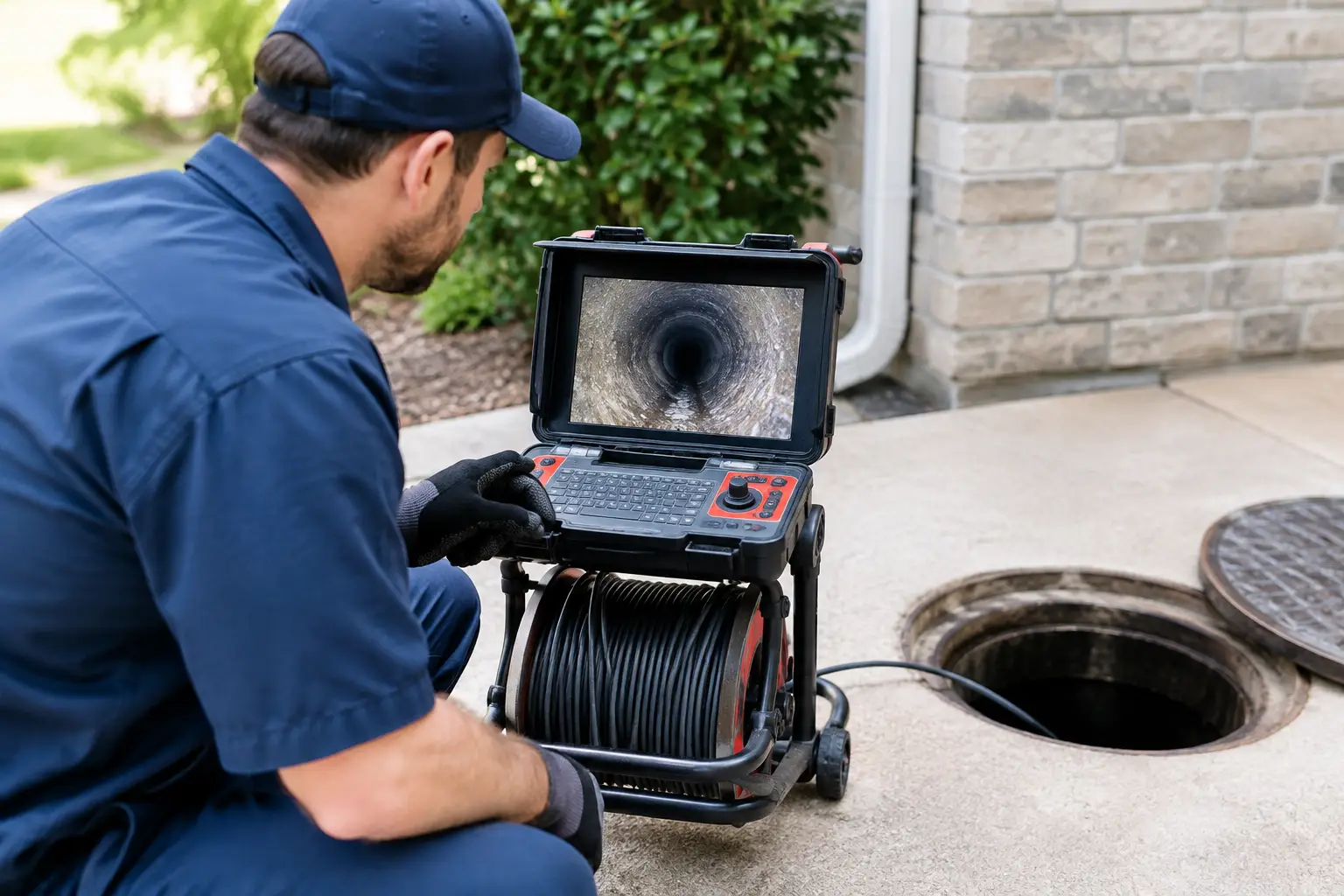
A slow drain can be annoying. A toilet that backs up twice in one month is a warning. When several fixtures are affected, the problem may be farther down the system than a plunger or drain cleaner can reach. A home sewer line inspection gives you a clear look inside the pipe, so you can make decisions based on evidence instead of guesses.
For Houston homeowners, that matters. Shifting soil, mature trees, aging pipe materials, and heavy rain can all expose weak points in a sewer system. The right camera inspection can show whether you are dealing with a simple blockage, a damaged line, or a condition that needs attention before it becomes a major property disruption.
What Happens During a Home Sewer Line Inspection
A sewer camera inspection is a diagnostic service, not a repair method. A trained technician feeds a specialized waterproof camera through an accessible cleanout or plumbing entry point. The camera sends live video from inside the pipe while the technician watches for defects, obstructions, and changes in pipe condition.
The goal is to identify both the problem and its location. Instead of digging across a yard, breaking up flooring, or approving a repair based on assumptions, you can see what is happening inside the line. That makes it easier to discuss the right next step with a plumber, contractor, or property manager.
A proper inspection also looks beyond the first visible blockage. A line may have a buildup of debris near the access point, but the underlying cause could be roots entering a joint farther down the pipe or a low section that repeatedly collects waste and water. Clearing the line without identifying that cause can lead to another backup soon after.
Problems a Sewer Camera Can Find
A camera does not repair a pipe, but it can reveal the conditions that lead to expensive repairs when left undetected. These are some of the most common issues found during residential inspections.
Root intrusion
Tree roots naturally seek moisture. Small roots can enter through tiny openings at pipe joints, cracks, or deteriorated seals. Once inside, they expand and catch paper, grease, and other debris moving through the sewer line.
Root intrusion often causes recurring slow drains or backups that seem to improve after drain cleaning, then return. The camera shows where roots are entering and how severe the intrusion is. That information helps determine whether cleaning is enough for now or whether the line needs repair.
Cracked, broken, or separated pipes
Sewer lines can crack from soil movement, age, corrosion, construction activity, or heavy loads above the line. In some cases, pipe sections separate at a joint. Wastewater may leak into the surrounding soil, while dirt can enter the pipe and create a blockage.
These defects are not always obvious from inside the home. You may notice foul odors, unusually green patches in the yard, repeated clogs, or soft ground near the line. A camera inspection can confirm whether a structural issue is present before anyone starts excavation.
Pipe bellies and low spots
A pipe belly is a section of line that has sagged below its intended slope. Water and solids can collect in that low area rather than flowing freely toward the city sewer or septic connection.
Bellies can be especially frustrating because a line may drain normally at times and back up at others. The camera helps distinguish a temporary blockage from a drainage problem caused by the pipe’s position. The repair approach depends on the depth, length, and severity of the low section.
Misaligned joints and offsets
Pipe sections should meet evenly. When the ground shifts or an older connection deteriorates, joints can become offset or misaligned. The lip created at the joint can catch waste and toilet paper, reducing flow and increasing the chance of a blockage.
An offset joint does not always mean immediate replacement is required. It depends on how much the line is restricted, whether roots are entering, and whether the condition is getting worse. A visual inspection gives you the facts needed to prioritize the repair appropriately.
Blockages and restricted flow
Grease, wipes, foreign objects, scale buildup, and debris can restrict a sewer line. Some blockages are straightforward to remove. Others point to a larger condition, such as a damaged pipe or root intrusion that will continue trapping material.
A camera inspection after clearing a difficult blockage can be just as useful as an inspection before cleaning. It confirms whether the pipe is open and helps explain why the blockage formed in the first place.
When Should You Schedule an Inspection?
You do not have to wait for sewage to back up into a shower or living space. A camera inspection is a practical step whenever the signs point to a possible main sewer line issue.
Consider scheduling service if multiple drains are slow, toilets bubble when water runs elsewhere in the house, or backups keep returning after drain cleaning. Sewer odors, wet areas in the yard, and unexplained changes around the plumbing system also deserve attention.
An inspection is also smart before a major sewer repair. If a contractor recommends extensive digging or pipe replacement, video evidence can help verify the condition and exact location of the issue. Clear visual findings keep the scope focused and help prevent paying for work that does not address the real problem.
For buyers of older homes, a sewer camera inspection can reveal a costly hidden condition before closing. This is particularly valuable when the property has mature trees, older cast-iron or clay piping, or no documented history of sewer repairs. A standard home inspection may identify signs of drainage concerns, but it typically does not provide a detailed view inside underground sewer lines.
Why Camera Inspection Can Save Time and Damage
The biggest benefit is accuracy. Sewer problems are hidden by nature, and symptoms can be misleading. A backup near one bathroom does not necessarily mean the problem is directly below that bathroom. Without a camera, locating the source may involve trial-and-error repairs or exploratory digging.
With video inspection, the technician can document the pipe condition and identify where the concern begins. That reduces unnecessary disruption to landscaping, driveways, flooring, and walls. It also gives your plumber a clearer starting point for repair planning.
There is a trade-off to understand: camera inspection provides visual evidence, but not every pipe can be fully inspected under every condition. A completely blocked line may need to be cleared before the camera can travel through it. Heavy standing water can limit visibility in a low section. In those situations, the inspection still provides useful information, but a follow-up after cleaning may be recommended for the full picture.
What to Expect From the Results
After the inspection, you should understand what was found, where it is located, and what action makes sense. A dependable inspection specialist should explain the findings in plain language, whether the result is a minor buildup, a root problem, a broken section, or a line that appears to be in good condition.
Not every finding calls for an emergency repair. A small amount of scale or an early root intrusion may be managed with maintenance and monitoring. A collapsed pipe, severe separation, or active sewage backup requires more immediate attention. The value of inspection is knowing the difference.
AA Camera Inspections provides the clear visual evidence Houston property owners need before making a repair decision. With specialized camera equipment and responsive service, the focus stays on finding the actual condition of the line, not selling unnecessary excavation.
If your drains are sending mixed signals, do not wait for a small warning to become a property-damaging backup. A focused inspection can replace uncertainty with a documented answer and help you protect your home, yard, and repair budget.
