
A sewer backup does not wait for a convenient time. Water rising at a floor drain, toilets that will not flush, or wastewater appearing where it should not can quickly threaten floors, walls, inventory, and daily operations. An emergency sewer camera inspection Houston property owners can depend on replaces guesswork with live visual evidence – so the next repair decision is based on what is actually inside the line.
For a homeowner, that may mean finding the root intrusion that keeps causing backups. For a property manager or business operator, it may mean identifying the exact section of a failed line before downtime spreads across the building. The goal is simple: locate the problem, document it clearly, and avoid digging where it is not needed.
When a Sewer Problem Calls for Immediate Camera Inspection
A single slow drain is not always an emergency. It could be a localized clog in a sink, shower, or fixture branch. The situation changes when multiple drains are slow, toilets gurgle, water backs up into tubs or floor drains, or the same blockage returns after clearing. Those signs often point to a restriction or defect farther down the main sewer line.
A camera inspection is especially valuable after a drain has been cabled or hydro jetted but the problem remains. Clearing equipment can restore flow temporarily without revealing why the line clogged in the first place. If roots, a broken pipe, a shifted joint, or a belly in the line is still present, the next backup may not be far behind.
For commercial properties, timing matters even more. A sewer issue in a restaurant, retail space, multifamily building, office, warehouse, or medical facility can affect tenants, customers, employees, and sanitation requirements. Visual inspection helps decision-makers move from a vague report of “drain trouble” to a documented condition and a targeted repair plan.
What an Emergency Sewer Camera Inspection Can Find
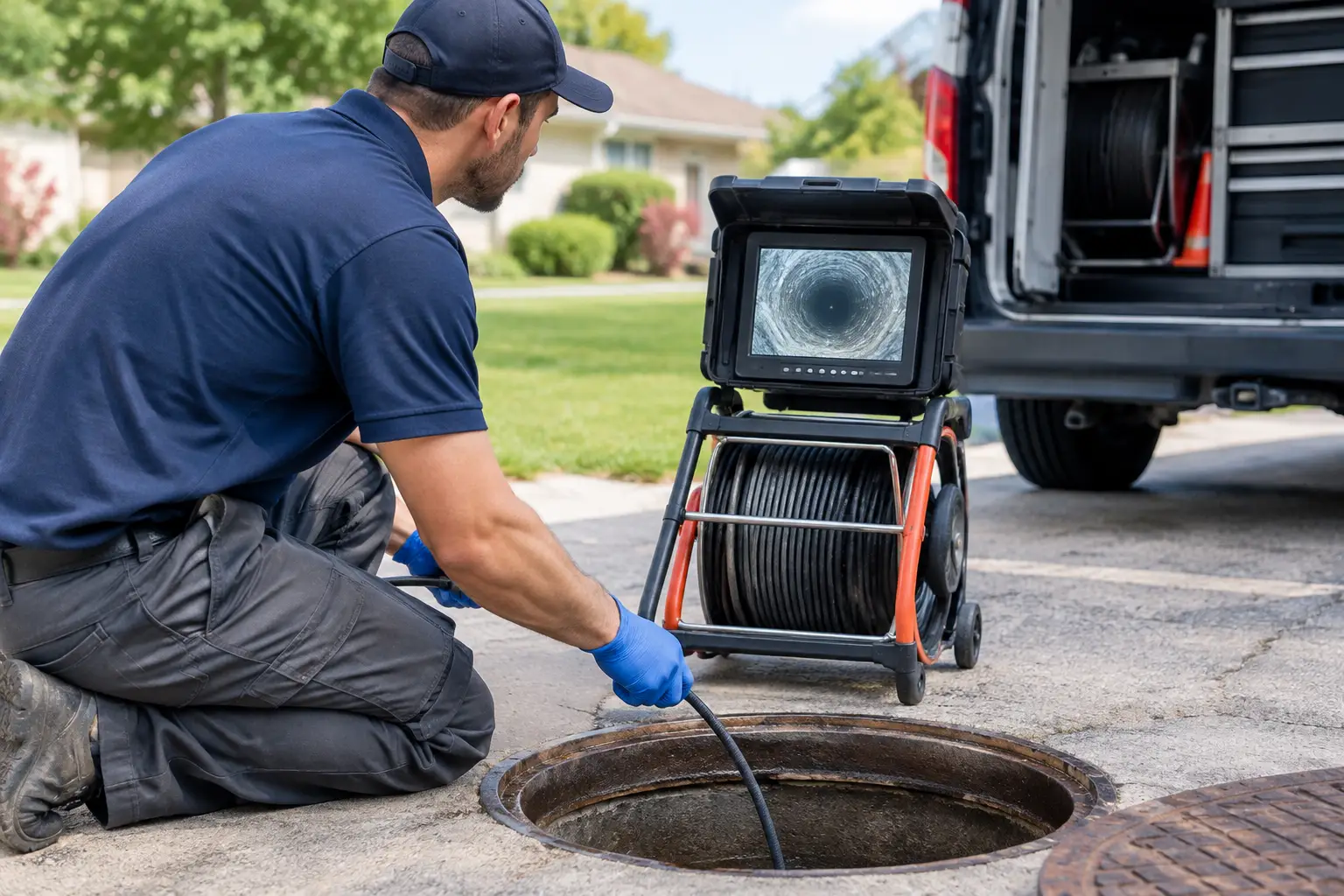
A professional sewer camera is pushed through an accessible cleanout or drain line and transmits real-time video from inside the pipe. This allows the inspection specialist to see conditions that cannot be confirmed from above ground. The camera can also help identify the location and depth of the issue, reducing unnecessary excavation.
Common findings include root intrusion, grease or debris blockages, cracked pipe, separated or misaligned joints, crushed sections, scale buildup, and pipe bellies where waste and water collect because the line has sagged. Older Houston-area properties may also have aging materials or previous repairs that create restricted flow points.
Not every camera finding requires the same response. A soft blockage may be cleared and followed with maintenance. Heavy roots may call for cutting and a repair recommendation. A collapsed or separated line may require excavation or replacement. The value of the inspection is knowing which situation you have before authorizing work.
That distinction can protect a property owner from paying for broad repairs based only on symptoms. Clear video evidence also gives plumbers, contractors, and project teams a better starting point. AA Camera Inspections is built around that role: providing accurate visual findings that help keep repair decisions focused and honest.
What Happens During an Emergency Sewer Camera Inspection in Houston
The inspection begins with access. In many cases, a cleanout near the building or property line provides the best entry point. If access is limited, the inspector assesses the available plumbing openings and the current condition of the system. The camera is then advanced through the line while the video feed is monitored in real time.
As the camera moves, the inspector watches for obstructions, damaged sections, standing water, joint separation, and changes in pipe material or alignment. A locating device can be used from above ground to trace the camera head. This helps establish where the issue sits beneath the property without turning the yard, slab, parking area, or landscaping into a test site.
The inspection is not a substitute for clearing a severe active blockage when flow must be restored immediately. In some cases, a plumber may need to remove the obstruction first so the camera can pass through and inspect the full line. In other cases, the camera itself reveals why clearing attempts have failed. The right sequence depends on access, the severity of the backup, and whether the pipe is passable.
A good inspection ends with understandable findings, not a screen full of unexplained footage. Property owners should know what was found, where it was found, how serious it appears, and what information a repair professional needs next.
What to Do Before Help Arrives
If sewage is backing up indoors, stop using water wherever possible. Do not flush toilets, run the dishwasher, start laundry, or take showers. Additional water can worsen the backup and spread contamination into finished areas.
Keep people and pets away from affected water. Wastewater can contain harmful contaminants, so avoid attempting cleanup without appropriate protection. If the problem is limited to a single fixture and no sewage is present, do not use harsh chemical drain cleaners. They can damage certain pipes, create safety concerns for technicians, and rarely solve a main-line issue.
If you know where the cleanout is located, make it accessible. Move vehicles, outdoor furniture, storage items, or landscaping materials that block access. For commercial sites, have a staff member who knows the building available to explain where backups first appeared and which areas have been affected. Those details can save valuable time during an emergency visit.
Why Camera Evidence Matters Before Digging
Excavation is sometimes necessary, particularly when a line has collapsed, separated, or failed structurally. But digging before locating the issue can mean opening the wrong area, expanding the work scope, and adding disruption to an already stressful emergency.
Camera inspection helps narrow the repair zone. That can preserve landscaping, concrete, flooring, and business operations when a focused repair is possible. It also creates a useful record for comparing conditions after cleaning or repair work is complete.
There are limits. Severe blockage, heavy standing water, or a collapsed pipe can prevent a camera from reaching the full length of the line. Even then, the point where the camera stops can provide meaningful evidence. An experienced inspection specialist can identify whether the line needs clearing, further access, or a repair strategy based on the visible condition.
Emergency Inspections for Homes and Commercial Properties
The symptoms may look similar, but the stakes differ by property type. At a home, a main sewer problem can interrupt bathrooms, damage flooring, and create a costly cleanup. At an apartment complex or commercial property, one line failure can affect multiple occupants or shut down critical parts of the building.
Homeowners often need clarity after repeat clogs, before a major sewer repair, or when buying an older property. Commercial teams may need documentation for maintenance planning, contractor coordination, tenant communication, or insurance records. In both cases, accurate location information helps control the cost and disruption of the next step.
Houston’s mix of mature neighborhoods, expansive commercial sites, shifting soils, trees, and varied pipe materials makes assumptions especially expensive. A camera does not fix a damaged line by itself. It does something just as necessary in an emergency: it shows what needs to be fixed and what does not.
When water is where it should not be, fast action matters. Start by limiting water use, protecting the affected area, and getting a clear look inside the line. The right evidence can turn a stressful sewer emergency into a focused repair decision.
