
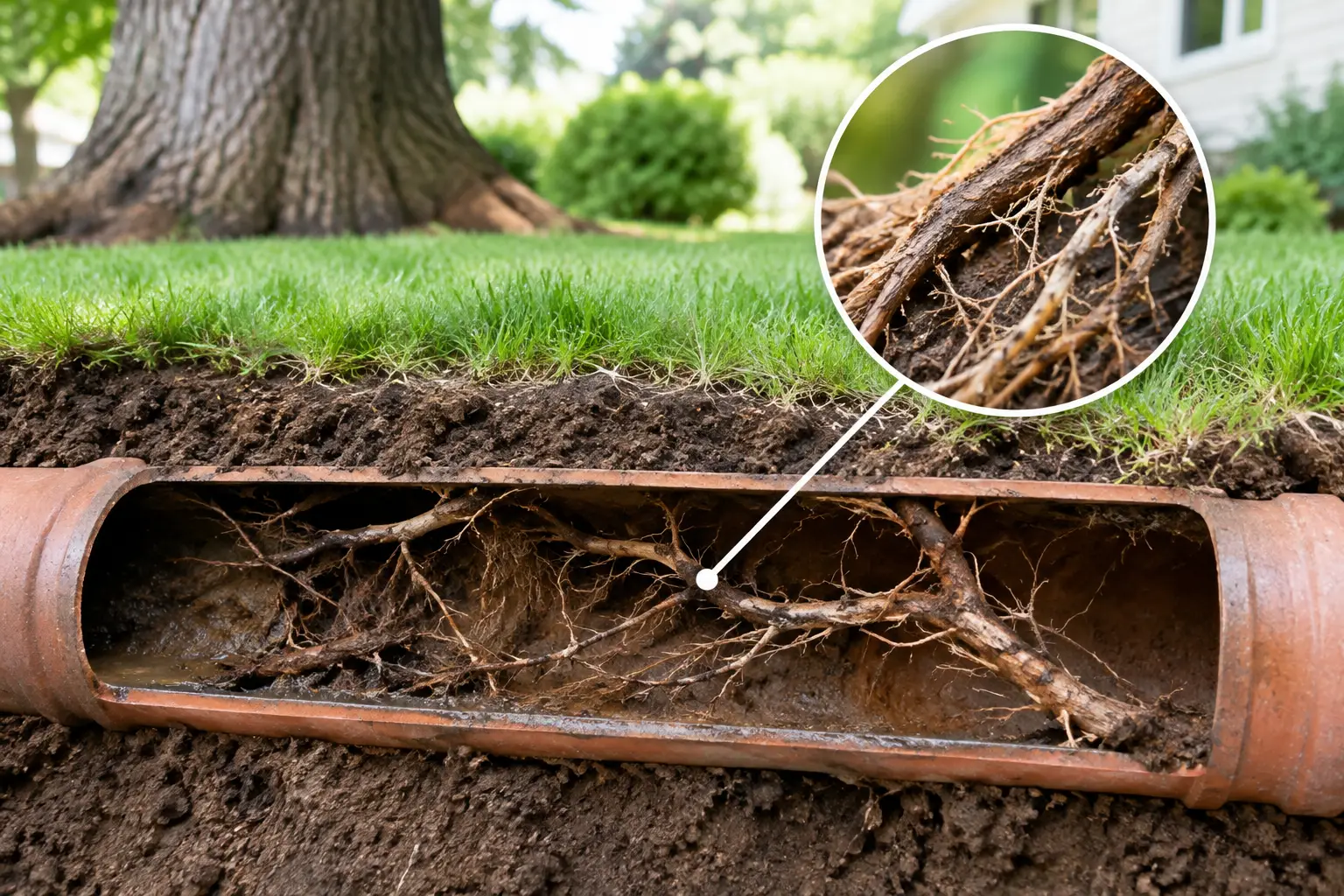
A sewer line can be filling with roots long before wastewater appears on the floor. The most common signs of roots in sewer line pipes are recurring drain backups, slow drainage across the building, gurgling fixtures, and unexpected wet areas outside. Those symptoms may feel intermittent at first, but roots do not clear themselves. They continue growing inside the pipe, catching debris and reducing flow until a manageable issue becomes a disruptive repair.
For Houston homeowners and commercial property operators, the right response is not guesswork or repeated drain cleaning. A sewer camera inspection can show what is inside the line, where the roots entered, and whether the pipe has damage that needs repair.
Why Roots Get Into Sewer Pipes
Tree and shrub roots are drawn to the moisture and nutrients around sewer lines. They do not usually break through an intact pipe wall from nowhere. More often, they enter through a small opening at a joint, crack, separation, offset connection, or deteriorated section of older pipe.
Once a fine root finds that opening, it can grow quickly in the consistent moisture inside the line. The roots form a web that snags toilet paper, grease, wipes, and other debris. Even after a blockage is cleared, the entry point remains. That is why the same drain problem can return weeks or months later.
Older clay, cast-iron, and concrete sewer lines are often more vulnerable, but newer piping can also develop trouble when joints shift, settlement occurs, or a connection is not sealed correctly. The condition of the pipe matters as much as the landscaping above it.
9 Signs of Roots in a Sewer Line
1. Drains Keep Slowing Down
A single slow sink may be a local fixture issue. Slow drainage at several fixtures, especially toilets, tubs, and showers on the lowest level, points more toward a developing main sewer restriction. Root growth reduces the usable diameter of the pipe, so water may drain normally at quiet times and slow down when several fixtures are used.
2. Backups Return After Drain Cleaning
A cable machine can punch through a root mass and restore flow temporarily. That does not mean the line is repaired. If the sewer backs up again after being snaked or cleaned, roots may still be attached to the pipe wall or regrowing through a damaged joint.
Repeated service calls are a strong reason to inspect the full line with a camera rather than treating each backup as a separate event.
3. Toilets, Tubs, or Showers Gurgle
Gurgling happens when air cannot move through the drainage system normally. As water pushes against a partial sewer blockage, trapped air may bubble back through nearby fixtures. You may hear the toilet gurgle when the washing machine drains or see bubbles in a shower after flushing.
This symptom can also come from venting problems, so it is not proof of roots by itself. When gurgling appears with slow drains or backups, the main sewer line needs attention.
4. Water Backs Up at the Lowest Drain
When the main sewer is restricted, wastewater often shows up first at the lowest open fixture. In a home, that may be a first-floor shower, bathtub, or floor drain. In a commercial building, it may be a restroom drain, janitor closet, or service-area floor drain.
This is an urgent warning. Continuing to run water can turn a partial backup into an indoor wastewater overflow.
5. You Smell Sewer Gas Indoors or Outside
A sewer odor near drains, in a crawl space, around a cleanout, or over part of the yard can indicate a drainage problem. A root intrusion may cause wastewater to sit in the pipe or leak through a compromised section. The smell may be strongest after heavy water use because pressure increases behind the restriction.
Odors can have other causes, including dry drain traps, but persistent sewer gas should not be ignored. A visual inspection helps separate a simple fixture issue from a buried line defect.
6. The Yard Has a Soft, Wet, or Unusually Green Area
A damaged sewer line can release wastewater into the surrounding soil. Look for a patch of grass that stays greener than the rest of the yard, damp ground during dry weather, soil that feels soft, or a low spot forming above the sewer route.
Roots may be part of the problem, but this sign can also point to a crack, separated pipe, or collapsed section. Excavating based on surface clues alone can be expensive and inaccurate. A camera inspection identifies the actual condition and location first.
7. Nearby Trees Have Matured Since the Sewer Was Installed
Large shade trees, palms, shrubs, and fast-growing landscaping deserve attention when they sit near the sewer route. Their roots can extend much farther than the visible canopy. A line that worked for years may begin showing trouble as the root system matures or as aging pipe joints start to leak.
Tree proximity does not automatically mean roots are in the line. It is a risk factor, not a diagnosis. The camera footage provides the evidence.
8. You Hear Dripping or Flow When No Water Is Running
If you hear unusual movement in pipes or see the water meter register usage when all fixtures are off, there may be a plumbing leak. A damaged sewer line usually does not affect the water meter, but a related underground water leak can encourage roots around utility lines and contribute to soil movement.
Because several underground issues can create similar symptoms, locating the correct line before digging matters. Accurate diagnostics prevent repairs to the wrong area of the property.
9. A Sewer Problem Appears During Heavy Use
Root intrusion often reveals itself when the line receives a larger volume of water. A busy morning at home, multiple tenants using restrooms, a laundry cycle, or a commercial lunch rush can overwhelm a partially blocked pipe. The system may seem fine when demand is low, then drain poorly or back up during peak use.
This pattern is especially important for property managers and business owners. Waiting for the next peak-use backup can mean restroom closures, tenant disruption, sanitation concerns, and avoidable downtime.
What a Sewer Camera Inspection Can Confirm
A sewer camera inspection replaces assumptions with visual proof. A technician feeds a specialized camera through an accessible cleanout or other entry point and views the inside of the pipe in real time. The footage can reveal whether roots are thin and scattered, dense enough to restrict flow, or connected to a larger pipe failure.
The inspection can also distinguish root intrusion from grease buildup, broken pipe sections, bellies that hold water, shifted joints, foreign objects, or construction debris. These conditions can produce similar symptoms, but they require different repairs. Treating every recurring backup as a simple clog risks spending money on temporary fixes.
With documented findings, your plumber or repair team can make a targeted recommendation. Depending on the pipe material and damage, that may involve cutting roots, hydro jetting, spot repair, pipe lining, or replacing a failed section. If the camera shows a sound pipe with minor roots, maintenance may be enough. If it shows an open joint or structural damage, clearing the roots alone is not a long-term solution.
Do Not Rely on Chemical Root Killers as a First Step
Chemical root products are often marketed as an easy answer, but they do not show why roots entered the line or whether the pipe is already damaged. They may offer limited maintenance value in certain situations, yet they are not a substitute for diagnosis or repair. Some products can also be unsafe for certain plumbing systems, septic systems, or surrounding vegetation when used incorrectly.
Avoid flushing wipes, grease, or heavy paper products in an attempt to “push through” a slow drain. Those materials can lodge in the root mass and trigger a backup faster. If wastewater is already backing up, limit water use until the line is assessed.
When to Schedule an Inspection
Schedule a sewer camera inspection promptly when backups recur, multiple drains slow at once, or you notice sewer odor or wet areas near the line. It is also a practical preventive step before purchasing an older property, beginning major landscaping, planning construction, or approving a costly sewer repair.
For commercial properties, consider inspection before a small drainage issue affects operations. Documented pipe conditions give facility teams a clearer basis for maintenance planning and help avoid emergency decisions during business hours.
Root problems are hidden, but they are not unknowable. A clear view inside the pipe gives you the information to protect the property, address the real defect, and choose repairs based on evidence instead of assumptions.
