
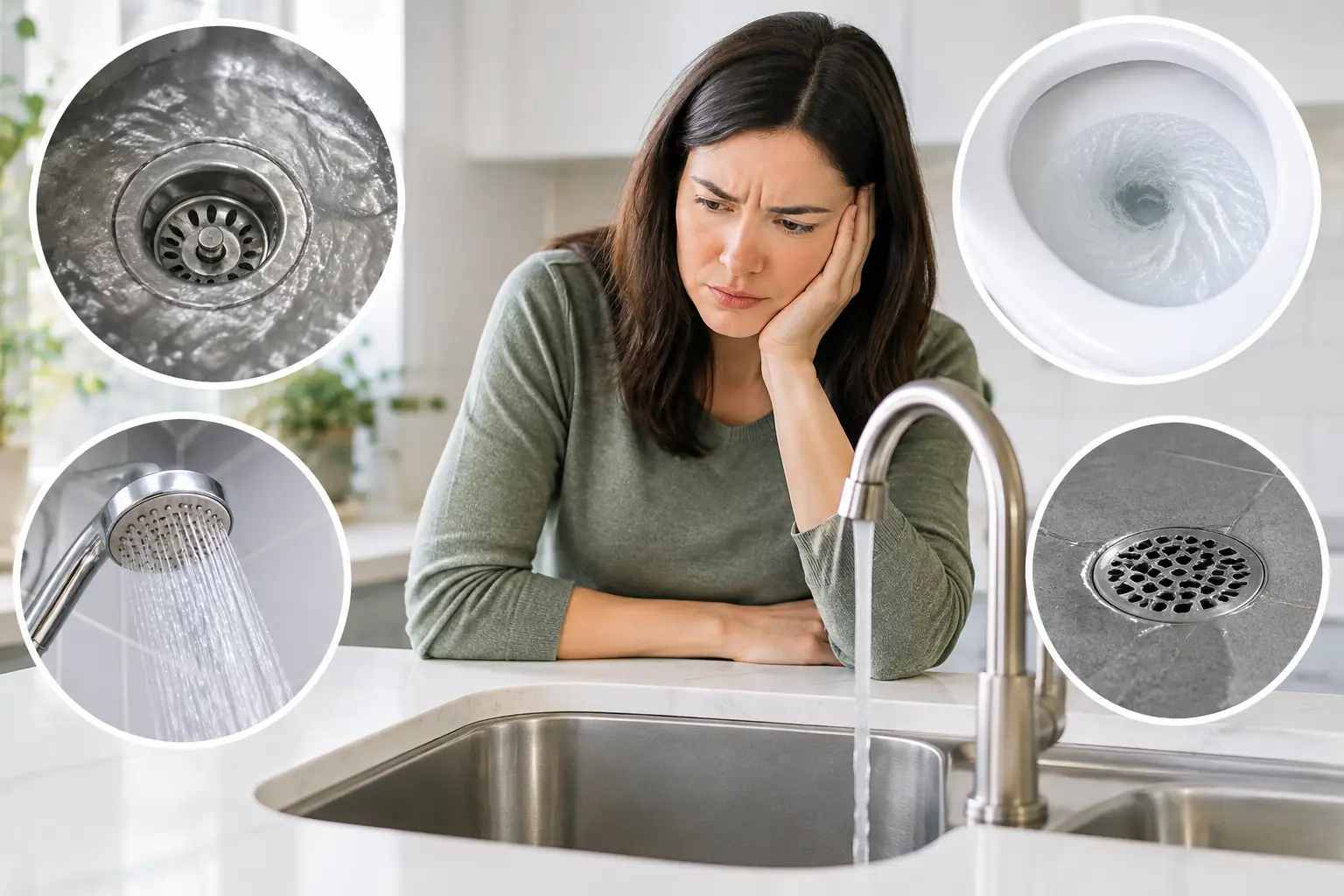
When the kitchen sink drains slowly, a local clog is the likely suspect. When the shower, toilets, laundry drain, and sinks all seem sluggish, the problem may be much farther down the line. Slow drains throughout house causes often point to a restriction in the main sewer line – a hidden issue that can turn into a messy backup if it is left to worsen.
A plunger or drain cleaner may briefly improve one fixture without addressing the condition affecting the entire system. The right next step is to identify where flow is restricted and why. That is where a sewer camera inspection replaces guesswork with clear visual evidence.
Slow Drains Throughout House Causes: Start With the Main Line
Every drain in a home eventually connects to a larger branch line and then to the main sewer line that carries wastewater away from the property. A partial blockage in that main line can allow water to pass slowly at first. As more water enters from showers, flushing toilets, dishwashers, or washing machines, the restricted line cannot keep up.
That pattern is different from a single clogged sink. If one fixture is slow while the rest work normally, the issue is usually limited to that fixture’s trap or nearby drain pipe. If several fixtures are slow, especially on the lowest level of the home, the main line deserves attention.
For commercial properties, the same principle applies. Multiple slow restrooms, floor drains, or break-room sinks can signal a developing blockage in a shared building drain or sewer lateral. Waiting until a restroom backs up can create downtime, cleanup costs, and disruption for tenants or customers.
What Can Restrict a Main Sewer Line?
Root intrusion
Tree roots naturally seek moisture. Even a small opening at a pipe joint, crack, or deteriorated connection can attract fine roots. Once inside, those roots grow and catch paper, grease, and other debris moving through the pipe.
Root intrusion is common around mature landscaping and older sewer systems, but it can affect newer lines with damaged joints as well. Mechanical cleaning may restore flow, yet recurring roots usually mean there is an opening that needs to be located and evaluated.
Grease, wipes, and buildup
Grease does not stay liquid once it cools in a sewer line. It can coat pipe walls, collect food residue, and gradually narrow the opening. Soap residue, hair, mineral deposits, and products marketed as “flushable” can add to the restriction.
This cause is especially likely where drains have slowed gradually over months or years. A blockage does not have to be complete to create trouble. A partially narrowed pipe may drain acceptably during light use, then struggle during a busy morning or when a washing machine empties.
Pipe bellies and poor slope
A sewer line needs consistent slope to move solids with the wastewater. When soil shifts beneath the pipe, a low area can form. Plumbers often call this a pipe belly. Water and debris collect in that sag instead of moving through the line as designed.
Houston-area soil movement and heavy rain can expose or worsen drainage issues, particularly in older properties. A belly cannot be confirmed from above ground, and repeated drain cleaning will not correct the underlying low spot. Camera footage can show standing water, the length of the affected area, and whether debris is repeatedly collecting there.
Broken, separated, or misaligned pipe sections
Ground movement, aging materials, poor prior repairs, and damage from construction can leave pipe sections cracked, offset, or separated. Wastewater may still get through for a time, but the damaged area can snag debris, admit soil, or allow roots to enter.
These defects are a reason not to assume that every slow drain needs only a simple cleaning. Clearing a blockage without seeing the pipe can leave a break or offset joint undiscovered until the next backup.
Scale and deterioration in older pipes
Cast iron, galvanized, and other aging pipe materials can corrode internally. As the interior surface becomes rough or scaled, the usable diameter decreases and debris catches more easily. In some older homes, the pipe may look open near one point but be heavily restricted farther along the run.
The repair decision depends on the pipe’s overall condition. Spot repair may make sense for a localized defect. Extensive corrosion, repeated failures, or multiple damaged sections may call for a larger repair plan. A camera inspection gives the property owner and plumber documentation to make that decision with fewer assumptions.
Clues That the Problem Is Getting Worse
Slow drainage is an early warning, but certain symptoms should move the issue higher on the priority list. Watch for these signs:
- Toilets that gurgle when a sink, shower, or washing machine drains
- Water rising in a tub or shower when a nearby toilet is flushed
- Sewage odors near drains, cleanouts, or outdoor areas
- Backups at the lowest drains in the home or building
- Slow drains that return soon after snaking or drain cleaning
A backup at a ground-floor shower, tub, or floor drain is particularly concerning because these fixtures are often the first place wastewater appears when the main line cannot carry flow away. Stop running water-heavy appliances until the line is assessed. Continuing to flush toilets or run the dishwasher can force more wastewater into the building.
Why Chemical Drain Cleaners Are a Poor Main-Line Diagnosis
Chemical drain products are designed for limited clogs near a fixture, and even then results vary. They are not a reliable solution for roots, a collapsed pipe, a belly, separated joints, or substantial buildup deep in the sewer line.
There is also a practical safety concern. Caustic chemicals can sit in a blocked pipe and create hazards for anyone who later opens or services the line. They may damage some plumbing materials when overused. If multiple drains are slow, save time and avoid adding chemicals to an already uncertain situation.
What a Camera Inspection Can Show
A sewer camera inspection sends a specialized, self-leveling camera through an accessible cleanout or drain line. The live view helps identify the condition inside the pipe rather than relying only on symptoms. It can reveal where a blockage begins, whether roots are present, where a line is holding water, and whether pipe sections are cracked, offset, or deteriorated.
Location matters as much as the defect itself. Knowing the approximate depth and position of a problem helps avoid broad exploratory digging. It also gives your plumber a better basis for recommending cleaning, repair, replacement, or further testing.
At AA Camera Inspections, the focus is on documenting what is actually in the line so property owners, plumbers, and project teams can make targeted decisions. Clear footage helps keep a routine drain issue from becoming an unnecessary excavation or an avoidable emergency.
When to Schedule an Inspection Instead of Waiting
A one-time slow sink may only need routine cleaning. But schedule a main sewer inspection when slow drainage affects multiple fixtures, returns after service, occurs in an older property, or follows a recent backup. It is also a sensible preventive step before major renovations, new hardscape work, or a property purchase where the underground sewer condition is unknown.
For a commercial site, inspection is worth considering before a recurring issue disrupts operations. Restaurants, multi-tenant properties, medical offices, retail spaces, and warehouses can all have drainage systems that receive heavier or more variable use than a typical home. A documented line condition supports planning rather than reacting during an outage.
If wastewater is backing up now, treat it as urgent. Limit water use, keep people away from contaminated areas, and arrange prompt professional help. The most useful repair begins with a precise answer: whether the line is blocked, damaged, shifted, or simply no longer flowing as it should. Seeing that condition clearly is the practical way to protect the property and choose the next repair with confidence.
