
A sewer problem rarely starts with a dramatic collapse in the yard. More often, it starts with a toilet that bubbles after flushing, a shower drain that slows down again days after being cleared, or an odor that appears near the foundation. Knowing how to find broken sewer pipe underground helps you act before a hidden defect turns into sewage backup, foundation concerns, landscape damage, or an unnecessarily large excavation.
The key is to avoid guessing. A broken sewer line can look like an ordinary clog from inside the house, but the repair paths are very different. Clearing a blockage may restore flow temporarily. A cracked, separated, crushed, or root-damaged pipe needs its exact condition and location confirmed before anyone starts digging.
Signs You May Have a Broken Underground Sewer Pipe
A single slow sink is usually a local drain issue. When several fixtures are slow, gurgling, or backing up at the same time, the problem may be farther down the main sewer line. This is especially common in older Houston-area homes with aging cast iron, clay, Orangeburg, or shifting underground pipe systems.
Watch for repeated drainage problems after a drain cleaning. If the line is cleared and backups return soon afterward, roots, a pipe belly, a separated joint, or broken pipe section may be trapping waste and paper. A plumber can clear the opening, but clearing alone does not explain why the line keeps catching material.
Changes outside matter, too. A persistently wet patch, unusually green strip of grass, sewer odor in the yard, soft soil, or a sinkhole-like depression can point to a leaking or collapsed underground line. These signs deserve prompt attention, but they do not identify the exact break. Water can travel through soil, and the wet area may not sit directly above the damage.
Inside, look for sewer odor, unexplained insect activity around drains, or water appearing at a floor drain. Commercial properties may notice recurring restroom closures, slow drainage across multiple suites, or interruptions in kitchens, laundry areas, and production spaces. In these cases, waiting for a complete backup usually costs more than investigating early.
How to Find Broken Sewer Pipe Underground Without Guessing
The most reliable method combines a sewer camera inspection with electronic pipe locating. The camera provides visual proof of what is happening inside the pipe. A locator then tracks the camera head or a connected transmitter from the surface to identify where the defect sits underground.
Start With a Sewer Camera Inspection
A technician feeds a waterproof, high-resolution camera through an accessible cleanout or drain opening. The live video shows the interior condition of the line as the camera moves toward the city connection, septic system, or downstream connection point.
This is where a suspected break becomes an informed diagnosis. The camera can reveal cracks, offset or separated joints, root intrusion, corrosion, collapsed sections, pipe bellies that hold standing water, construction debris, and heavy buildup. It can also distinguish a simple clog from structural damage that will keep causing clogs.
A proper inspection should document the findings, not simply report that there is “a problem somewhere in the line.” Ask for clear video evidence and a description of the pipe material, defect type, and approximate distance to the issue. That information gives you a stronger basis for discussing repair options and comparing estimates.
Locate the Defect From the Surface
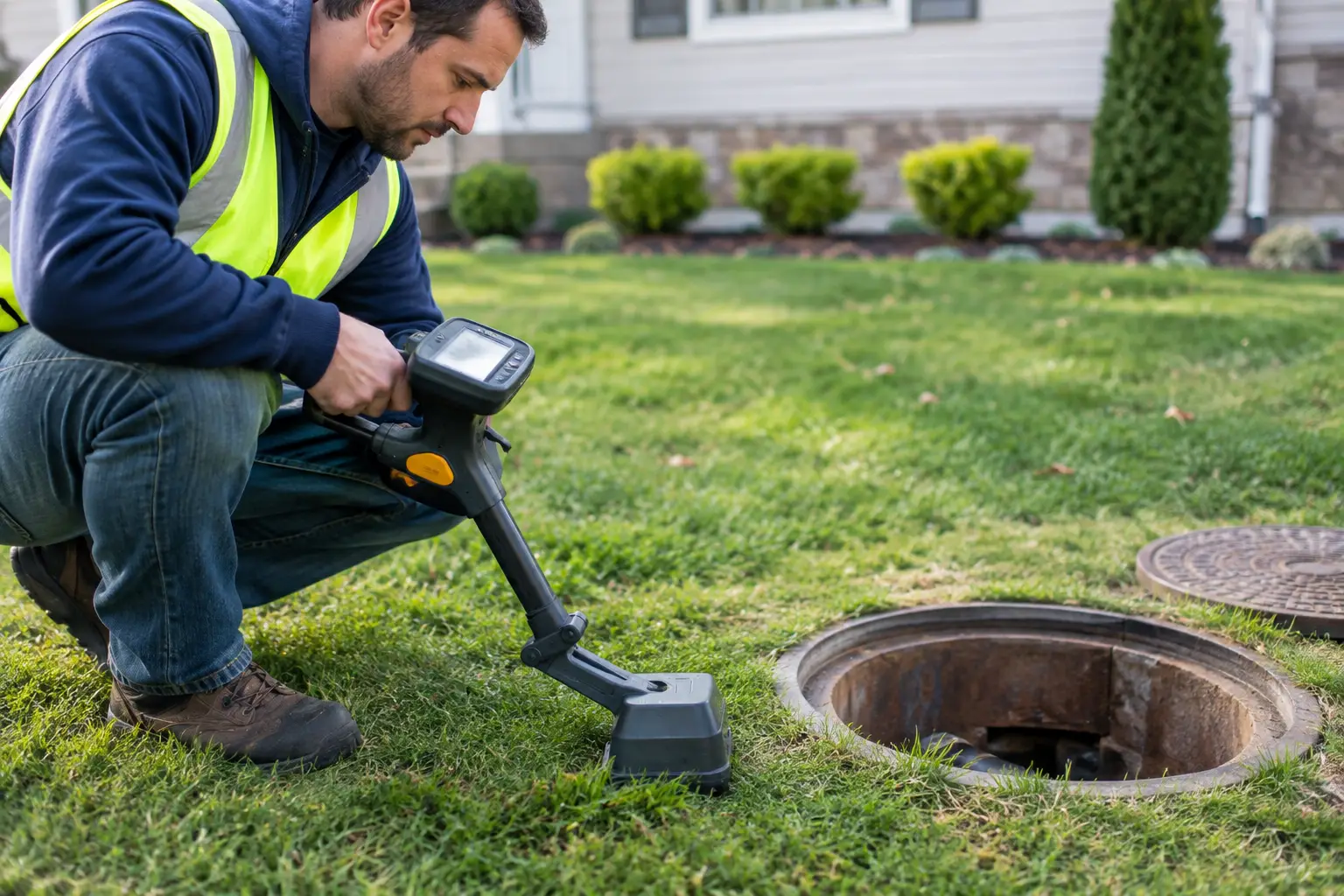
Seeing a defect inside the pipe is only half the job. Before excavation, the camera location must be traced above ground. A technician uses a receiver to detect the signal from a sonde, or transmitter, built into or attached to the camera system.
This process can identify the defect’s horizontal position and approximate depth. It helps determine whether the pipe runs beneath landscaping, concrete, a driveway, a slab, or a building addition. It also limits the chance of digging in the wrong place, which protects your property and keeps repair costs more controlled.
Ground Hound utility locating can be especially valuable when a repair or construction project is planned near buried utilities. Sewer locations should not be assumed based on old plans, visible cleanouts, or where a previous owner says the line runs. Site conditions change, and undocumented repairs are common.
Confirm What Is a Pipe Break and What Is Not
Not every alarming camera image means the pipe must be excavated. A heavy root blockage may be removable, followed by a plan to repair the entry point if roots return. A localized scale buildup may respond to cleaning. A belly may cause recurring slow flow but may not require immediate emergency work if it is minor and the line remains functional.
On the other hand, a separated joint, major crack, collapse, or line that has shifted out of alignment can require targeted repair. The right recommendation depends on the pipe material, depth, accessibility, severity of damage, and whether the system is already backing up. Accurate inspection keeps those decisions based on evidence rather than urgency alone.
Why Surface Clues and DIY Methods Fall Short
Homeowners often try drain cleaners, repeated plunging, rented snakes, or probing the yard for a wet spot. These may address symptoms, but they cannot reliably locate an underground break. Chemical drain cleaners can also damage certain pipe materials, create hazards for the next technician, and fail to reach a structural defect.
A rented drain cable may punch a small path through roots or debris, which can make the drain seem better for a short time. It will not show whether the cable passed through a broken joint, whether the pipe has collapsed, or whether the line has standing water from a sag. The same is true of guessing based on the location of odors or soggy grass.
Excavating without locating is the costliest form of guesswork. It can mean removing healthy landscaping or concrete, missing the damaged section, and exposing workers to nearby utilities. For commercial sites, unnecessary digging can also disrupt parking, access routes, tenants, and daily operations.
What to Do While You Wait for an Inspection
If wastewater is backing up into tubs, showers, floor drains, or toilets, limit water use immediately. Do not run the dishwasher, washing machine, or multiple fixtures in an attempt to push the obstruction through. More water can make an indoor backup worse.
Avoid pouring chemical cleaners into a main-line problem. Let the inspection technician know if chemicals have already been used so the work can be performed safely. Keep children and pets away from affected wastewater areas, and document visible symptoms such as exterior wet spots or the fixtures involved.
For a commercial property, notify the people responsible for sanitation and building operations early. Restrict affected restrooms or drains as needed, and preserve access to cleanouts, utility rooms, and the suspected area outside. Fast access helps the inspection move from symptom to answer with less downtime.
When a Sewer Camera Inspection Is Worth Scheduling
A camera inspection is a practical first step when backups are recurring, when a property has older sewer piping, or when you are considering a major repair quote. It is also smart before purchasing a home, remodeling near plumbing lines, adding a structure, or beginning excavation on a site with uncertain buried utilities.
AA Camera Inspections provides visual documentation and precise locating so homeowners, plumbers, property managers, and project teams can see the condition of the line before choosing the next repair. That clarity can prevent a small underground defect from becoming an expensive property-wide disruption.
A broken sewer pipe does not announce itself with a label in the yard. The fastest path to a confident repair is to inspect the line, locate the defect, and make the next decision with real evidence in hand.
