
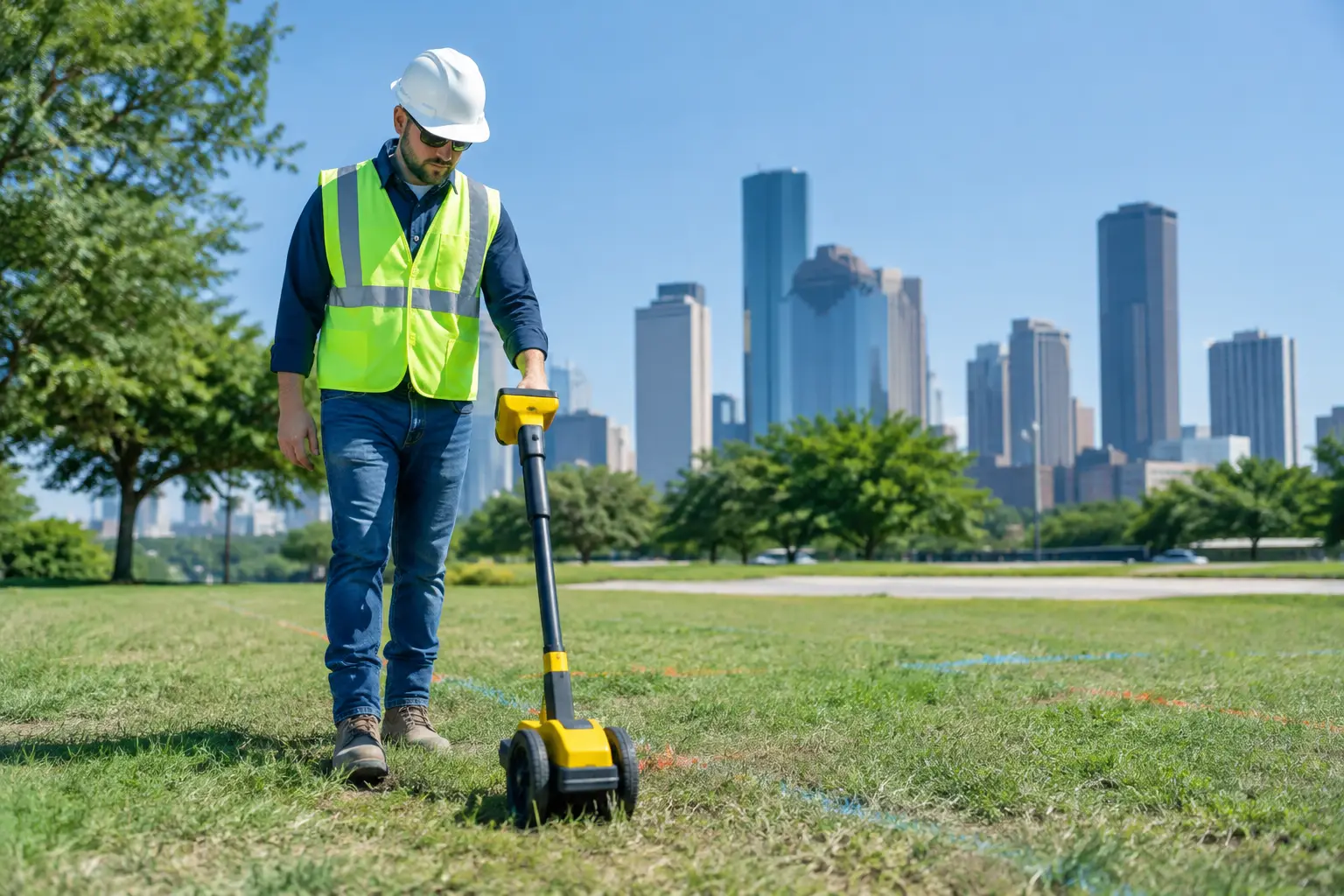
A fence post, a new drainage trench, or a small excavation for a repair can turn expensive fast when it strikes a buried line. Private utility locating services Houston property owners and project teams use can identify hidden utilities before digging begins, giving you a clearer path forward and reducing the risk of damaged pipes, cables, shutdowns, and avoidable repairs.
Houston properties often have more going on underground than owners realize. Aging service lines, irrigation systems, private electrical runs, sewer laterals, gas lines beyond the meter, communications lines, and undocumented past repairs can all sit below the surface. Accurate locating replaces assumptions with evidence before the first shovel, auger, or machine enters the ground.
What Private Utility Locating Services in Houston Do
Private utility locating is the process of detecting and marking certain underground utility lines on private property. A trained technician uses specialized locating equipment to trace signals, identify likely line paths, and mark their approximate position at the surface. The purpose is simple: help contractors, plumbers, homeowners, and property managers make informed decisions before excavation.
This service is especially valuable when work takes place beyond the public utility connection point. Public utility marking programs may identify some utility-owned lines, but they do not always mark privately owned facilities or every line serving a structure, detached building, pool, sign, irrigation system, or commercial area. That gap is where private locating can matter most.
At AA Camera Inspections, Ground Hound utility locating helps provide a more complete picture of conditions below the property. When a buried sewer or drain line is part of the concern, locating can also be paired with a camera inspection. The camera shows what is happening inside the pipe, while locating helps identify where that pipe runs underground. Together, those findings support a more targeted repair plan.
Why Houston Properties Need a Clear Underground Picture
Houston soil conditions, heavy rain, ongoing development, and a wide range of property ages create practical challenges for buried infrastructure. A line that was installed decades ago may not follow the route an owner expects. A repair completed by a previous owner may have changed the path of a pipe. Commercial sites can have multiple service connections, additions, and abandoned lines that complicate a simple digging project.
For homeowners, the risk may start with a backyard project. Installing a fence, planting a tree, replacing a driveway section, adding a patio, or correcting drainage can put buried utilities in the work zone. Even relatively shallow digging can damage a line.
For commercial properties, the stakes are often higher. A damaged utility can interrupt operations, create safety concerns, delay a construction schedule, or affect tenants and customers. Property managers and facility teams need documentation they can share with plumbers, contractors, and decision-makers before authorizing work.
Private locating does not eliminate every excavation risk. Depth estimates and signal conditions can vary, and some materials or inactive lines can be harder to detect. But it gives your team far better information than digging based on plans, memory, or guesswork.
When to Schedule Private Utility Locating
The best time to locate utilities is before the project becomes urgent. If you know excavation, boring, trenching, post installation, or major landscaping is planned, schedule the locating service early enough to review the markings and adjust the work plan if needed.
It is also smart to call when a plumbing repair requires digging. A sewer camera inspection may reveal roots, a separated joint, a broken section, a pipe belly, or a blockage in a buried line. Before excavation starts, locating the line helps the repair crew access the right area instead of opening a larger section of yard, pavement, or flooring than necessary.
Recurring backups are another common reason to investigate. Slow drains and repeated clogs do not always mean the problem is inside the building. A main sewer issue can be hidden underground, and locating after a camera inspection can help pinpoint where the repair should be made.
Private locating is useful before purchase decisions as well. Buyers and commercial investors evaluating an older property may want a clearer view of the sewer route and buried utility conditions before committing to a major repair budget. It is a practical step when the cost of a surprise underground failure would be significant.
Utility Locating and 811 Are Not the Same Service
Calling 811 before digging remains an essential step. It helps initiate marking for participating public utilities. However, 811 markings may not cover privately owned lines on your property. The exact scope depends on the utility, the property, and the ownership of the line.
For example, a public utility may mark up to a meter, transformer, or connection point, while the line that continues from that point to a house, detached garage, irrigation controller, pool equipment, or commercial building may be private. Those are often the lines that are vulnerable during private excavation.
A responsible project plan can include both services: contact 811 as required, then arrange private locating for lines that may not be included in the public marking scope. If there is any uncertainty, ask before work begins. A few questions upfront are easier and less costly than dealing with a damaged line after the fact.
Pairing Pipe Camera Inspections With Locating
A pipe camera inspection answers a different but closely related question: what is inside the line? A high-resolution sewer camera can travel through accessible drain and sewer piping to document the condition of the interior. It can show root intrusion, cracks, offset joints, collapsed sections, grease buildup, standing water, restricted flow, and other hidden defects.
Once the issue is visible on camera, a locator can help identify its approximate position from above ground. That combination is particularly helpful when a plumber needs to excavate for a spot repair. Rather than digging along the assumed path of a sewer line, the crew has visual evidence of the defect and a better idea of where to access it.
The trade-off is that not every situation calls for both services. If the job only involves locating an electrical line before a fence installation, a sewer camera inspection may not be relevant. If a drain is backing up but no exterior excavation is planned yet, a camera inspection may be the first priority. The right approach depends on the work planned and the information missing.
What to Expect During the Visit
Before the appointment, gather any information you have about the property. Old surveys, construction plans, repair invoices, photos, and notes about prior utility work can all be useful. They do not replace field locating, but they can help the technician understand where to begin.
The technician will assess accessible areas, use locating equipment appropriate for the suspected utilities, and mark detected routes where conditions allow. Markings are meant to guide safer planning, not serve as a guarantee that no other buried obstacles exist. Crews should still use careful excavation practices near marked areas, particularly when utility depth is unknown.
If a camera inspection is part of the visit, you can expect clear visual findings rather than vague recommendations. That evidence helps keep repair conversations grounded. You can see whether the issue is a localized break, root intrusion, a belly holding water, a blockage, or another condition that requires action.
Protect the Property Before the Project Starts
Underground damage is rarely convenient. It can mean emergency plumbing work, disrupted business operations, torn-up landscaping, delayed construction, and costs that could have been avoided with better information. Private locating is a practical way to reduce that exposure before excavation begins.
If you are planning to dig, repair a buried sewer line, or investigate recurring drainage trouble, start with a clear picture of what is below the surface. Accurate findings give your plumber, contractor, or project team a better place to begin – and help protect the property you have worked hard to maintain.
