
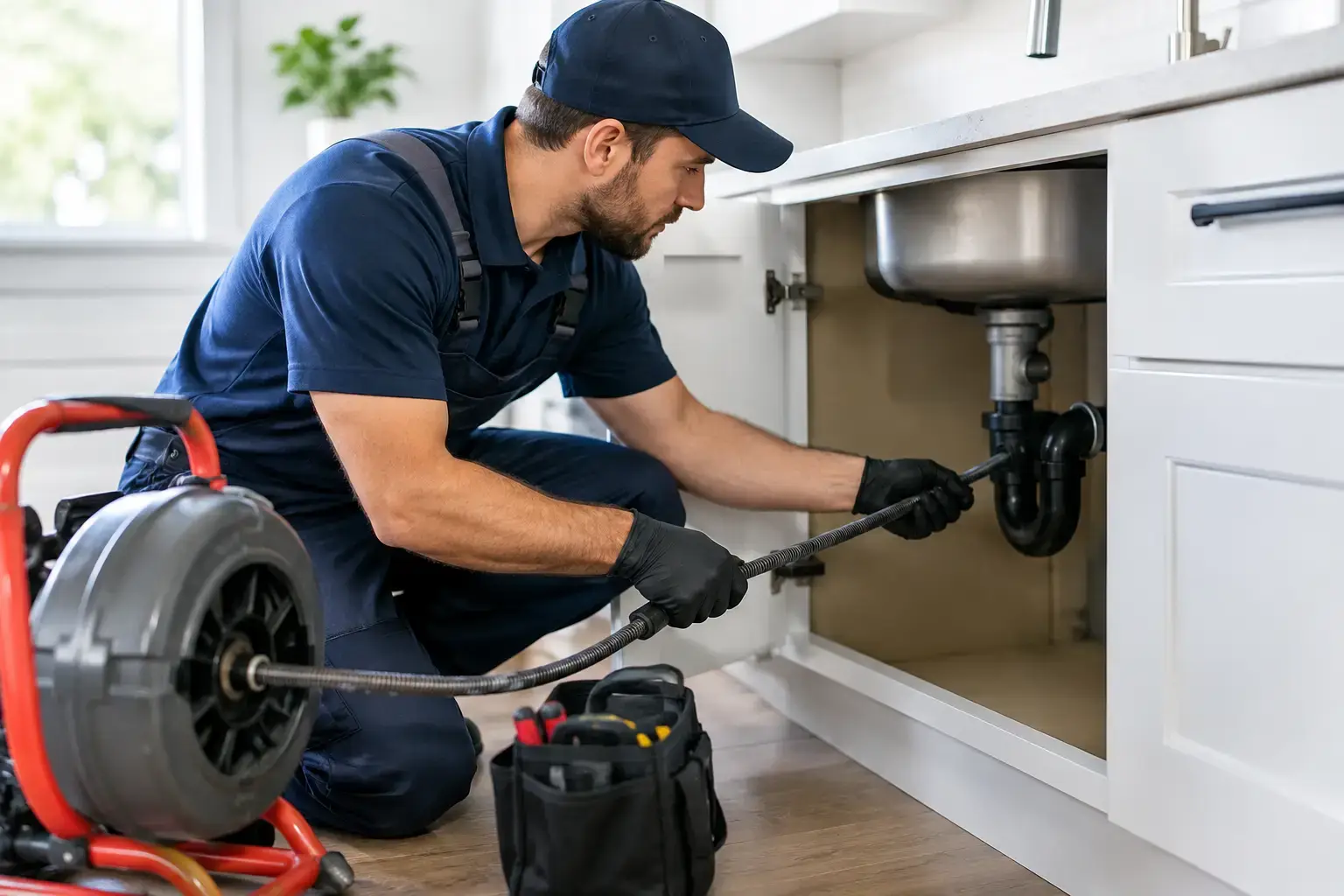
A kitchen sink that drains a little slower each week may not feel urgent. But drain maintenance is often the difference between a simple service call and a sewage backup, damaged flooring, or a business forced to close a restroom. The goal is not to treat every slow drain like an emergency. It is to catch developing problems before they interrupt your home, property, or operations.
For Houston-area properties, that means paying attention to what is happening inside the pipes as well as what is happening outside them. Heavy rain, shifting soil, mature trees, aging sewer lines, grease buildup, and high daily use can all affect how a drainage system performs. The right maintenance plan starts with clear evidence, not guesswork.
What Drain Maintenance Actually Covers
Drain maintenance is the regular care and inspection of plumbing lines that carry wastewater away from sinks, showers, toilets, floor drains, and appliances. It includes sensible daily habits, professional cleaning when buildup is present, and camera inspection when there are signs of a deeper issue.
A plunger or drain cleaner can sometimes restore flow temporarily. That does not always mean the line is healthy. If grease, roots, a shifted joint, or a pipe belly is restricting the line, water may move again for a while and then begin backing up all over again. Repeated quick fixes can delay the diagnosis while the underlying condition gets worse.
For commercial properties, maintenance also involves protecting operations. Restaurants, offices, retail spaces, multifamily buildings, and warehouses may have higher-volume fixtures or long runs of underground pipe. A blockage in the wrong location can affect customers, tenants, employees, and sanitation requirements all at once.
Signs Your Drains Need More Than a Quick Fix
One slow sink is often a localized issue. Several slow fixtures, recurring toilet backups, or water appearing in an unexpected drain point to a problem farther down the system. These are the warning signs that deserve attention:
- Drains that clog again shortly after plunging or snaking
- Gurgling from toilets, tubs, or sinks when another fixture is used
- Sewage odors inside, around cleanouts, or near the yard
- Water backing up into a tub, shower, or floor drain
- Lush, wet, or sunken patches of ground near a sewer line
- A sudden increase in drain problems after heavy rain
Not every symptom means the same thing. A bathroom sink can be slowed by hair and soap buildup, while a main sewer line may be affected by root intrusion, a collapsed section, heavy scale, or a separated pipe connection. That is why visual inspection is valuable. It identifies the condition and location of the problem before a repair plan is chosen.
Daily Habits That Protect Your Plumbing Lines
Good drain maintenance begins with controlling what enters the system. In kitchens, avoid rinsing grease, cooking oil, coffee grounds, rice, pasta, and food scraps into the sink. Grease may look harmless while it is warm, but it cools and clings to pipe walls, collecting other debris until flow is restricted.
In bathrooms, use hair catchers where practical and keep wipes, cotton products, dental floss, and hygiene items out of toilets. Even products labeled flushable can create problems in older pipes, low-flow systems, or sewer lines with existing restrictions. Toilets are designed for waste and toilet paper, not household disposal.
Be careful with chemical drain cleaners. A product may open a minor blockage, but harsh chemicals can also sit in a pipe, create fumes, damage certain materials, or make later service more hazardous. They are especially risky when the drain is fully blocked and the product cannot move through the line. If a drain continues to clog, a professional diagnosis is usually a better investment than repeated chemical treatments.
Why Camera Inspections Matter for Drain Maintenance
A drain camera inspection gives property owners and maintenance teams a real view inside the line. A specialized camera is sent through an accessible cleanout or drain opening, transmitting live footage as it travels through the pipe. The inspection can show whether the issue is buildup, roots, a broken line, a low spot holding water, a blockage, or a misaligned connection.
This changes the maintenance conversation. Instead of excavating based on symptoms or repeatedly clearing a line that keeps failing, you can make a targeted decision. If the camera shows grease buildup, cleaning may be the appropriate next step. If it reveals a collapsed pipe or major root intrusion, the repair can focus on the affected section rather than the entire yard or floor.
Camera inspections are particularly useful when problems keep returning, when a property has older plumbing, or before a large repair project begins. They can also document pipe conditions for owners, plumbers, contractors, and property managers who need a clear record of what is happening underground.
AA Camera Inspections provides this kind of visual evidence for residential and commercial properties, helping customers locate hidden defects without unnecessary digging. Clear footage and accurate locating reduce uncertainty and help keep repair decisions grounded in the actual condition of the pipe.
A Practical Maintenance Schedule for Homes and Businesses
The right schedule depends on the property, pipe material, age of the plumbing, nearby trees, occupancy, and usage. A newer home with no symptoms may only need attention when a problem develops. An older home with large trees near the sewer route may benefit from periodic inspection before roots turn into a full obstruction.
For homeowners, a good starting point is to monitor drain performance throughout the year and act promptly when patterns change. If you have experienced a prior root issue, recurring main line backup, or sewer repair, ask about a maintenance schedule based on the camera findings. The condition of the line should guide the frequency, not a one-size-fits-all calendar.
Commercial properties often need a more structured approach. Food-service operations may require routine grease management and drain cleaning because daily use creates predictable buildup. Multifamily buildings may need scheduled inspections or cleaning for shared lines, especially when there is a history of tenant backups. Facilities with floor drains, restrooms used by the public, or long operating hours should have a response plan before drainage trouble becomes a shutdown.
When Maintenance Becomes an Emergency
A slow drain can wait for an appointment in many cases. Sewage backing up into a building, water spilling from a floor drain, multiple fixtures failing at once, or an active leak near a sewer line needs immediate attention. Stop using water fixtures if possible. Running toilets, washing machines, dishwashers, and faucets can add more water to a blocked line and worsen the backup.
Do not assume the problem is limited to the nearest fixture. If a toilet backs up when the washing machine drains, or a shower fills when a sink runs, the restriction may be in a shared branch or main sewer line. A camera inspection can help establish where the failure is occurring and whether cleaning, repair, or replacement is needed.
For commercial buildings, fast action limits the impact on customers and staff. Isolate affected restrooms or fixtures, document visible conditions, and bring in qualified professionals who can identify the source rather than simply treat the symptom. This protects the building and provides a clearer path to reopening affected areas.
Make Maintenance Decisions With Evidence
Drain maintenance is not about spending money on work you may not need. It is about avoiding the higher cost of waiting until a hidden issue becomes visible through a backup, leak, or damaged surface. When symptoms are minor, basic prevention and monitoring may be enough. When problems recur or affect multiple fixtures, it is time to see what the pipe is telling you.
A clear camera inspection can turn an uncertain plumbing problem into a practical next step. Address small warning signs early, keep harmful materials out of your drains, and use documented pipe conditions to protect your property before a routine day becomes an emergency.
