
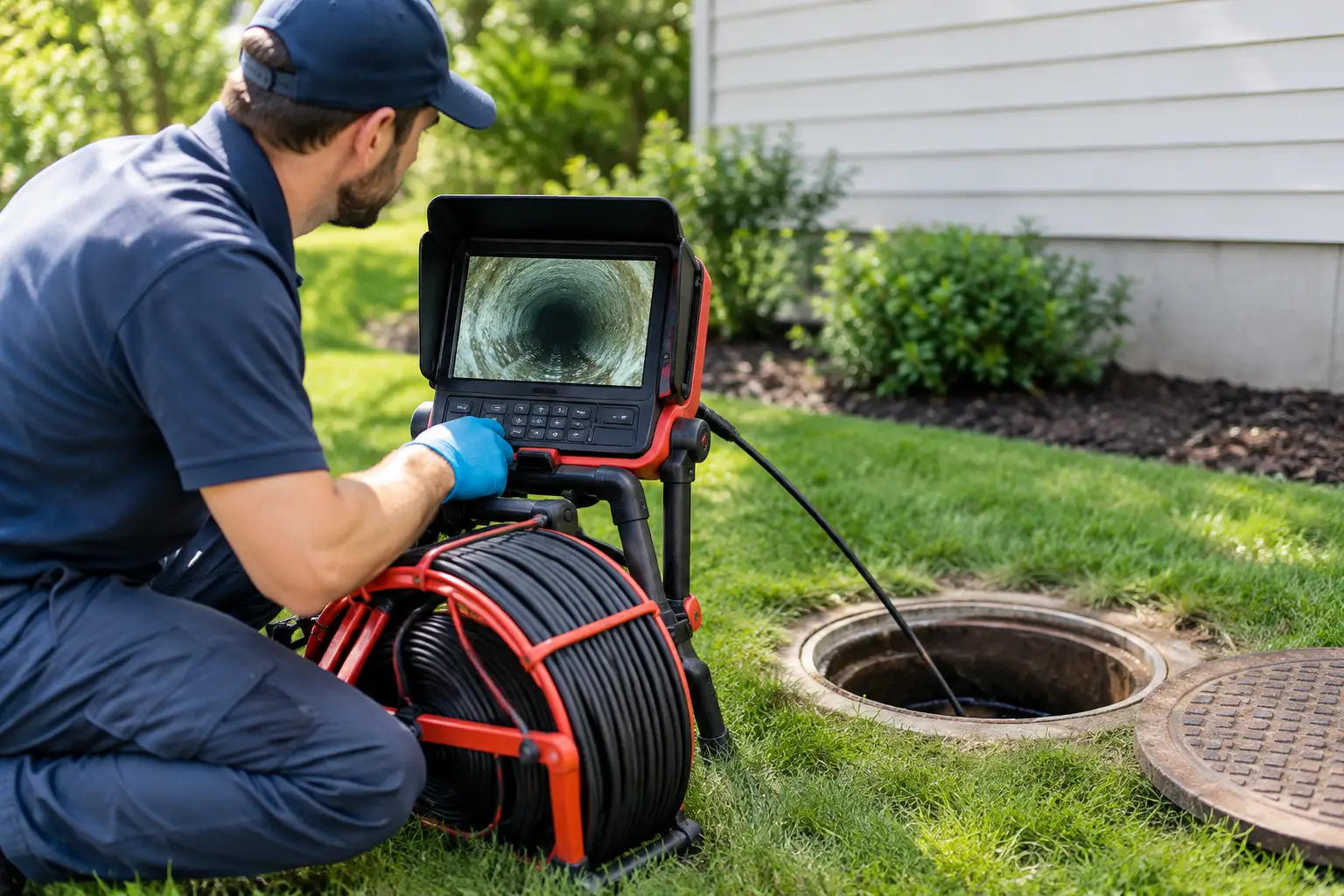
A recurring backup is not a mystery to live with. A professional drain pipe inspection puts a camera inside the line so you can see what is causing the trouble, where it is located, and whether a repair is actually needed. That means fewer assumptions, less unnecessary digging, and a clearer path forward for your Houston home or property.
A drain can run slowly because of a simple buildup near a fixture. It can also slow down because tree roots have entered a sewer line, a pipe has shifted apart underground, or a low section of pipe is holding waste and water. Those problems can look similar from inside the building. Camera evidence separates them.
What a Drain Pipe Inspection Actually Shows
A pipe camera is fed through an accessible cleanout or drain opening and travels through the plumbing line while transmitting live video. The inspection specialist follows the route of the pipe, observes its condition, and identifies defects that cannot be confirmed from above ground.
The footage may reveal a blockage, grease accumulation, root intrusion, cracks, separated joints, corrosion, misaligned connections, or a pipe belly. A belly is a sagging section of line where water and solids collect instead of moving downhill as intended. It often leads to repeat clogs even after the line has been cleared.
The goal is not simply to confirm that there is a problem. It is to identify the exact condition behind the problem. A plumber or property owner can then decide whether cleaning, spot repair, replacement, or monitoring makes sense.
That distinction matters. Clearing a line may restore flow, but it will not repair a break or stop roots from coming back through an open joint. On the other hand, a camera inspection can prevent a property owner from approving major excavation when the real issue is limited buildup that can be cleaned.
When to Schedule a Drain Pipe Inspection
Some drain issues are obvious emergencies. Sewage backing up into tubs, showers, floor drains, or lower-level spaces calls for immediate attention. Others begin as smaller warnings that are easy to dismiss until a line fails at the worst possible time.
Consider an inspection when drains repeatedly clog in the same area, multiple fixtures drain slowly, toilets gurgle, or wastewater appears where it should not. Foul sewer odors, damp ground near a sewer route, and unexplained wet spots can also point to a damaged underground line.
For homeowners, an inspection is especially useful before spending money on repeated drain cleaning. If the same line needs to be cleared every few months, there is usually a reason. Camera footage can show whether the cause is roots, a broken fitting, poor pipe alignment, or an obstruction farther down the line.
Commercial properties have their own warning signs. Restroom backups, slow floor drains, kitchen drain issues, or recurring service interruptions can affect customers, tenants, employees, and operations. In restaurants, multifamily buildings, offices, retail spaces, and industrial facilities, a targeted inspection helps maintenance teams address the source before a shutdown becomes unavoidable.
A pre-purchase inspection can also be worthwhile for older homes and commercial buildings. A building can look well maintained while its buried sewer lateral has aging materials, root damage, or a hidden offset. Knowing the condition of the line before closing gives the buyer better information for planning and negotiation.
Why Camera Evidence Beats Guesswork
Traditional troubleshooting often starts with symptoms: where the backup appeared, which fixture is slow, and whether a cable machine can get the line flowing. Those details are useful, but they do not always explain the condition of the pipe itself.
A camera inspection adds visual proof. You can see whether the line is full of roots, whether a connection has separated, or whether the pipe holds standing water. When paired with locating equipment, the issue can be traced from the video to a specific area of the property. This helps prevent broad, disruptive excavation based on an estimate.
For property managers and project teams, documented footage is also valuable when several parties are involved. It gives plumbers, contractors, owners, and maintenance staff a common reference point. Instead of debating what may be underground, everyone can review what the camera found and plan the next step around the evidence.
This is where a specialized inspection company provides a practical advantage. AA Camera Inspections focuses on finding and documenting concealed pipe conditions, giving customers a clear picture before repair decisions are made. The inspection does not replace a qualified repair professional when repair is needed. It makes sure that repair is based on facts.
Common Problems Found Inside Drain Lines
Root intrusion is one of the most common causes of recurring sewer trouble in established Houston neighborhoods. Roots seek moisture and can enter through tiny gaps at joints or damaged pipe sections. Once inside, they catch paper and debris, gradually reducing the opening until the line blocks.
Broken or separated lines can result from age, soil movement, poor installation, heavy traffic above the line, or damage during nearby work. When pipe sections no longer connect correctly, wastewater can escape and soil can enter the line. The result may be backups, sinkholes, or continuing blockages.
Pipe bellies are another concern, particularly in lines affected by shifting soil. The camera may show standing water or settled debris in a low section. Cleaning may help temporarily, but the long-term solution depends on the extent of the sag and how much it affects flow.
Not every finding requires immediate replacement. A small amount of scale, grease, or buildup may be manageable with proper cleaning and maintenance. Minor root growth may be removable, though the opening that allowed it in should be watched. The right recommendation depends on the pipe material, severity of the defect, frequency of symptoms, and the risk of waiting.
What to Expect During the Inspection
In many cases, the technician starts at an existing cleanout, which provides direct access to the sewer or drain line. If access is limited, the best entry point depends on the plumbing layout and the type of line being inspected. The camera is advanced through the pipe while the operator watches the live feed.
A proper inspection should do more than produce a quick look inside the pipe. It should identify meaningful conditions, note their location, and make the findings understandable. If a defect needs repair, locating the line from above ground can help narrow the work area and reduce avoidable disturbance to landscaping, concrete, flooring, or parking areas.
The line may need to be cleared first if heavy blockage prevents the camera from traveling through it. That is not a failed inspection. It is simply a reminder that the camera can only document the route it can safely reach. Once access is restored, the full condition of the line can be evaluated more accurately.
A Smarter Way to Plan Repairs and Maintenance
Camera inspections are useful before repairs, but they are equally useful after major work. Post-repair footage can verify that a new connection is aligned, that debris has been removed, and that the line has a clear path. For commercial properties, scheduled inspections can support preventive maintenance and reduce surprise failures during busy operating hours.
The best timing depends on the property. A newer home with no symptoms may not need frequent inspection. An older property with mature trees, cast iron piping, repeated clogs, or a history of sewer repairs deserves closer attention. Businesses with high-volume drain use may benefit from a maintenance plan based on actual pipe condition rather than a one-size-fits-all schedule.
When water is moving the wrong way, the expensive part is often not the clog itself. It is the damage, downtime, and rushed decisions that follow. Seeing the line first gives you the information to act with confidence – before a hidden problem becomes a property-wide mess.
