
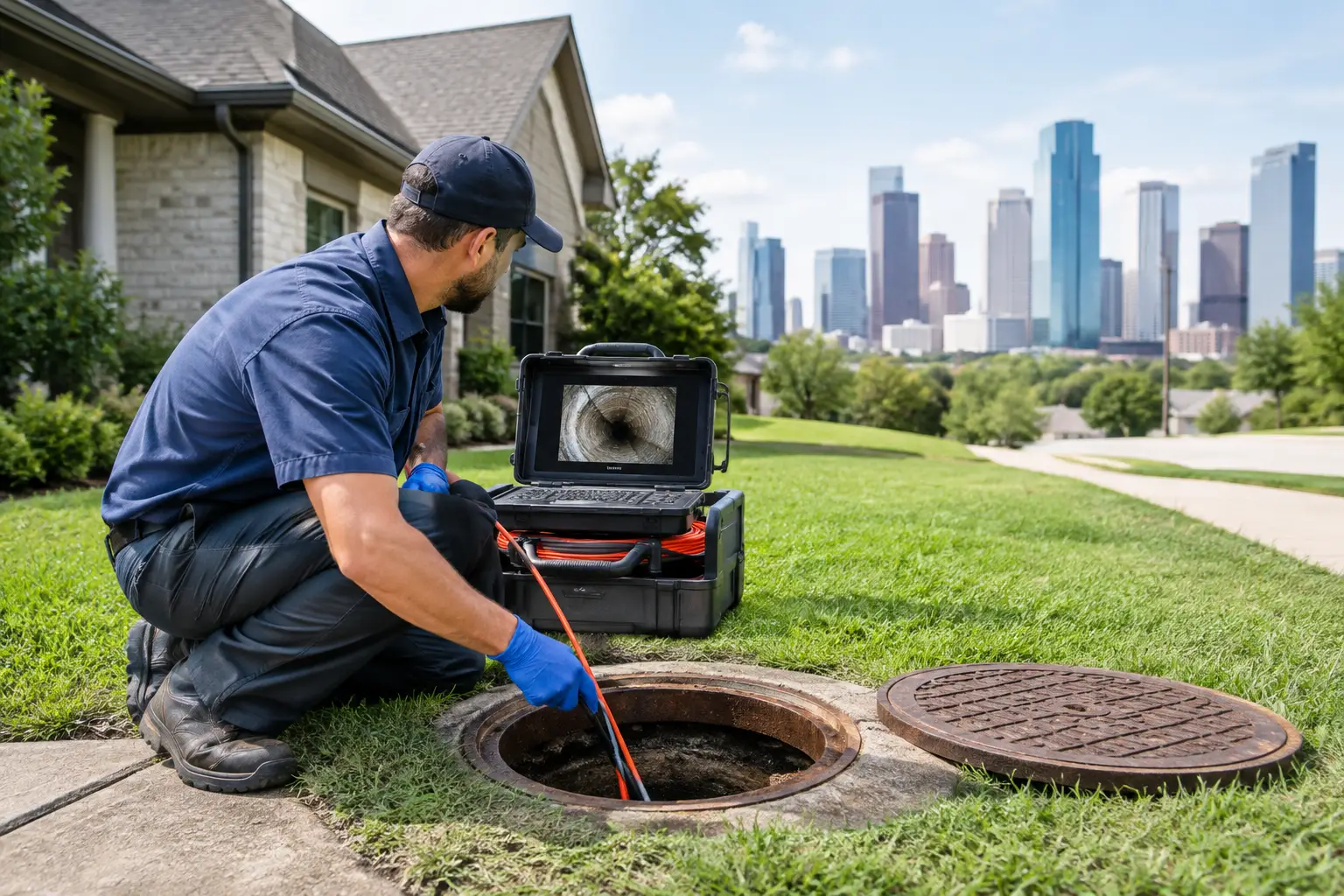
A sewer problem rarely announces itself at the right time. It starts with a slow bathroom drain, a recurring backup, a wet patch near the yard, or an odor that disappears before a plumber arrives. This sewer lateral inspection guide explains how camera inspections turn those frustrating clues into clear visual evidence – before a hidden line failure creates expensive damage.
Your sewer lateral is the underground pipe that carries wastewater from your home or commercial building to the public sewer connection or a private septic system. Because most of it is buried, guessing at its condition can lead to unnecessary digging, repeat service calls, and repairs that miss the real issue. A camera inspection provides a live view inside the pipe, helping you make a repair decision based on what is actually there.
What a Sewer Lateral Camera Inspection Shows
A technician feeds a specialized waterproof camera through an accessible drain cleanout or other entry point. As the camera travels through the line, it sends real-time video to a monitor. The inspection can show the pipe material, its condition, the direction of flow, and the exact location of a defect.
This is more than a way to confirm a clog. A clear camera view can distinguish between a soft blockage that may clear with proper cleaning and a structural issue that will keep causing trouble. That difference protects you from spending money on the wrong fix.
Common findings include root intrusion, broken or separated pipe sections, offset or misaligned joints, grease buildup, construction debris, corrosion, and pipe bellies. A belly is a low section of pipe where water and solids collect instead of flowing freely. It may not cause an immediate backup, but it can create repeated drainage problems over time.
For Houston properties, soil movement and shifting ground conditions can put extra stress on buried lines. Older homes may also have cast-iron, clay, or Orangeburg pipe that has reached the point where close inspection is more useful than assumptions.
When to Schedule a Sewer Lateral Inspection
You do not need to wait for sewage to reach a floor drain. Recurring symptoms are often the best reason to inspect early, while repair options are still manageable. Slow drains throughout the building, gurgling toilets, multiple fixtures backing up at once, or wastewater appearing at an exterior cleanout are all signs that the main sewer line may be restricted.
A single slow sink can be a local fixture issue. A slow sink combined with a sluggish tub, toilet bubbling, or a backup at the lowest drain points more strongly toward the lateral. The location and pattern matter.
An inspection is also a smart step before major work. Property buyers can use it to understand the condition of a buried sewer line before closing. Homeowners planning a remodel should inspect before adding fixtures that increase demand on an aging line. Contractors and project teams benefit from documented pipe conditions before excavation, concrete work, or utility-related construction begins.
Commercial properties have their own warning signs. A restaurant may experience grease-related restrictions, while a retail center or office building may have long shared lines where a failure affects multiple tenants. For these properties, a planned inspection can be far less disruptive than responding to a closure-causing backup during business hours.
How to Prepare for the Inspection
Most sewer camera inspections require very little preparation, but access makes the process faster. If you know where the exterior cleanout is located, clear plants, storage, or equipment away from it. For commercial sites, make sure the technician can access utility rooms, restrooms, kitchens, and maintenance areas if those are part of the suspected drainage path.
Avoid running large amounts of water through the system immediately before the visit unless the inspection professional advises otherwise. Heavy flow can make it harder to view certain areas clearly. If the line is fully blocked, it may need to be cleaned before a camera can travel through it. That is not a failed inspection – it is useful information about the severity and location of the obstruction.
Have a short history ready. Note when the problem began, which fixtures are affected, whether it happens after rain, and whether the line has been cleaned or repaired before. These details help direct the inspection and make the video findings easier to interpret.
Reading Your Camera Inspection Results
The strongest inspection result is specific. Rather than hearing that the line is “bad,” you should know what defect was found, where it is located, how severe it appears, and what repair options fit the condition.
A blockage caused by roots, for example, may respond to professional cleaning in the short term. But if the roots are entering through separated joints or cracks, cleaning alone does not correct the entry point. You may choose periodic maintenance for a limited period, or you may decide that spot repair or replacement is the better long-term investment. The right choice depends on the pipe material, the condition of surrounding sections, access, budget, and how often the problem returns.
Cracks and offsets deserve the same practical review. A minor joint offset may still allow flow, while a severe separation can catch waste, admit soil, and worsen into a collapse. A competent inspection identifies the condition without pushing every customer toward full replacement.
Ask for documentation when possible. Video footage, still images, distance markings, and a clear explanation give you a record to share with your plumber, property manager, contractor, or insurer. At AA Camera Inspections, the goal is simple: provide evidence that supports a targeted next step and keeps repair decisions honest.
Repair Options Depend on What the Camera Finds
Not every sewer lateral problem requires digging up a yard, driveway, or slab. If the camera shows buildup without structural damage, cleaning may restore normal flow. If damage is limited to one accessible area, a focused spot repair may be practical.
When a pipe has widespread corrosion, repeated root intrusion, multiple bellies, or extensive separation, a larger repair may be the more cost-effective choice. Trenchless methods can reduce surface disruption in some situations, but they are not automatically the right answer. A line with major collapse, severe misalignment, or poor access may require conventional excavation. The camera inspection helps determine which approach is realistic before work begins.
For commercial operators, the repair plan should also account for downtime. A documented inspection can help schedule maintenance during lower-traffic hours, coordinate tenants or staff, and avoid an emergency closure that costs more than the repair itself.
A Practical Maintenance Plan After Inspection
If your lateral is in good condition, keep the inspection record and pay attention to changes in drainage behavior. Do not flush wipes, paper towels, grease, or items labeled “flushable” that do not break down reliably in sewer lines. Outdoor landscaping also matters. Trees with aggressive root systems should be considered carefully when planted near underground utilities.
If an inspection reveals early root activity or a developing restriction, set a maintenance schedule based on the actual condition of the pipe. There is no universal timeline. A newer PVC line with no defects needs a different plan than an older clay or cast-iron line with known root entry points.
A sewer lateral stays out of sight until it does not. Getting a camera view at the first sign of trouble gives you time to protect the property, compare repair options, and act before a small drainage issue becomes a messy emergency.
