
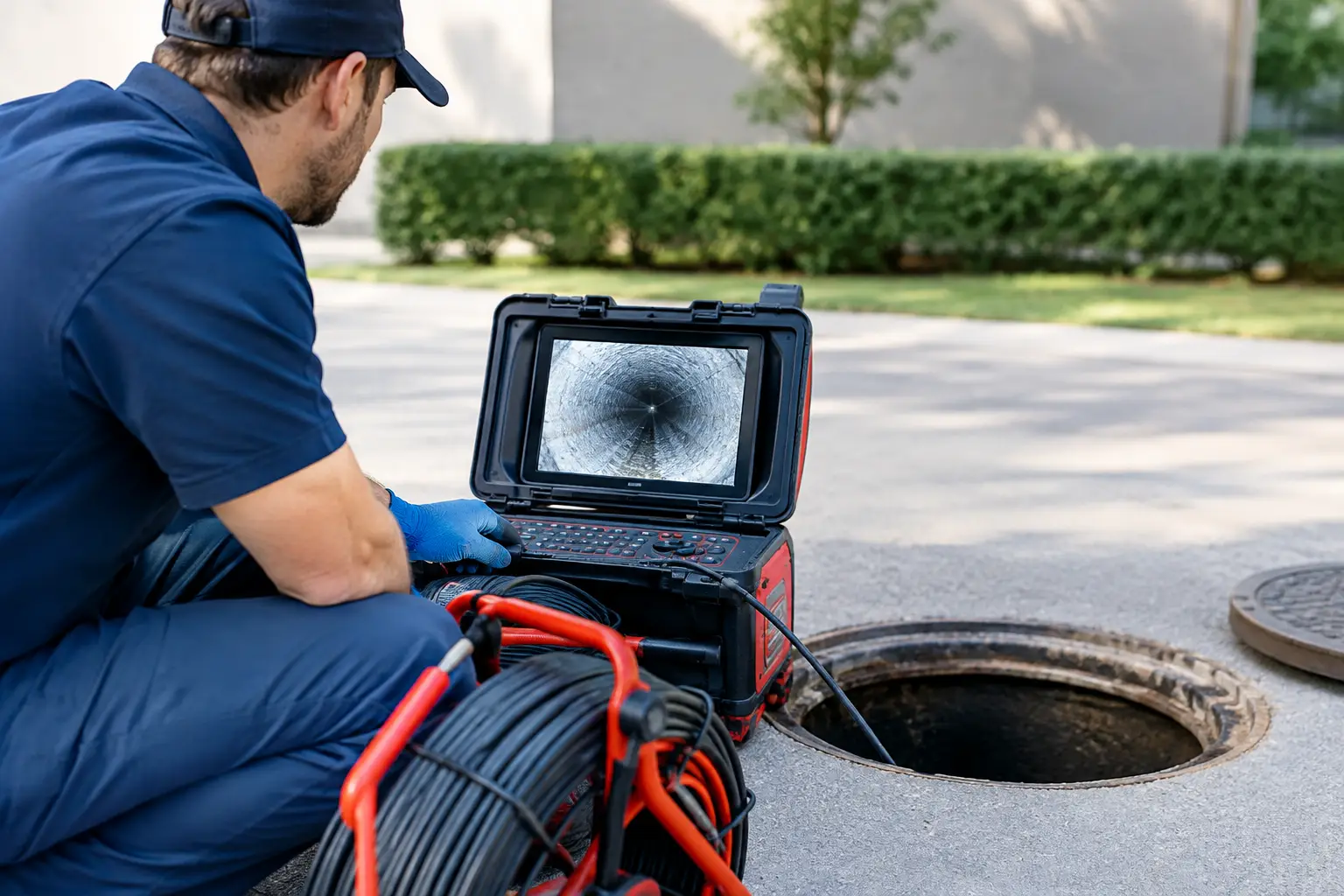
A sewer backup can make any property owner want the fastest possible fix. But when the suspected problem is underground, digging first can turn a repair into a costly guessing game. In the sewer camera versus excavation decision, a camera inspection is usually the practical first move: it shows what is happening inside the line before anyone disrupts a yard, driveway, slab area, or business operations.
A camera cannot repair a failed pipe, and some problems will still require excavation. What it can do is replace assumptions with visual evidence. That evidence helps homeowners, plumbers, property managers, and contractors make a repair decision based on the actual condition and location of the line.
Why digging without a diagnosis gets expensive
Excavation has a necessary place in sewer repair. A collapsed pipe section, a severe offset, a broken connection, or a line that needs replacement cannot be corrected with a camera alone. The issue is not whether digging is ever needed. The issue is whether it should happen before the source of the problem is confirmed.
Without an inspection, a crew may excavate where the pipe is assumed to be, only to find that the blockage or break is farther down the line. On older Houston properties, pipe routes may not match assumptions, and years of repairs, landscaping, additions, and utility work can make the situation less predictable. A missed location can mean more trenching, added restoration work, and more time without a working sewer system.
For a commercial property, the consequences can grow quickly. Digging near customer access areas, parking lots, kitchens, restrooms, loading zones, or tenant spaces can interrupt normal operations. A clear camera report helps project teams plan the scope, timing, and repair method with fewer surprises.
Sewer camera versus excavation: what each one tells you
A sewer camera inspection places a high-resolution camera into an accessible pipe opening, typically through a cleanout. As the camera travels through the line, it provides a real-time view of the pipe interior. The inspection can identify root intrusion, grease buildup, foreign objects, cracks, separated joints, bellies that hold standing water, corrosion, misaligned connections, and restricted flow.
Just as valuable, the camera helps identify where the defect is located. With locating equipment, the issue can often be marked above ground so a plumber or repair crew knows where to focus. Instead of opening a broad area in search of a problem, they can investigate a known section of pipe.
Excavation, by contrast, provides direct physical access to the line. It allows crews to remove a damaged section, reconnect pipe, replace fittings, correct slope problems, or install a new line. It is the repair method, not the diagnostic method. When excavation is necessary, a camera inspection makes it more targeted.
That distinction matters for cost control. The lowest inspection price is not automatically the goal, and neither is avoiding excavation at all costs. The goal is to spend money on the work that actually solves the problem.
When a camera inspection should come first
A camera inspection is especially useful when symptoms point to a hidden drain or sewer issue but do not identify the cause. Recurring backups are a common example. A line may clear temporarily after snaking, then clog again because roots, a pipe belly, a broken joint, or a partial collapse remains in place.
It is also a smart first step before approving a major sewer repair quote. Visual footage gives property owners a way to understand what was found and where it was found. It helps keep the conversation grounded in evidence, whether you are working with a plumber, contractor, insurance representative, or property owner association.
For residential properties, camera inspections are often requested when multiple drains are slow, toilets gurgle, sewage backs up into a tub or shower, or a yard has an unexplained wet area. Buyers of older homes may also want the sewer line inspected before closing, particularly when the age and material of the buried piping are uncertain.
Commercial operators may use routine camera inspections as preventive maintenance. Restaurants, multifamily properties, office buildings, retail sites, and industrial facilities all depend on reliable drainage. Finding scale buildup, grease accumulation, roots, or early joint separation before a full blockage can prevent an emergency call at the worst possible time.
When excavation is the right next step
Camera footage sometimes reveals a problem that cannot be cleaned, lined, or managed from inside the pipe. A fully collapsed section, extensive pipe deterioration, a major separation, or a line with improper grade may require excavation and replacement. In those cases, delaying the repair can lead to repeated backups, soil erosion, property damage, and sanitation concerns.
Excavation may also be appropriate when the damaged area is accessible and limited. If the camera identifies a short broken section in an open yard, a targeted dig and repair may be more straightforward than a larger rehabilitation project. The condition of the pipe, its depth, its material, surrounding utilities, and access conditions all affect the best method.
There are times when emergency conditions require quick action. Active sewage overflow, a severe blockage affecting a busy facility, or a damaged line that threatens a structure may call for immediate repair planning. Even then, a fast camera inspection can often provide the information needed to avoid digging in the wrong place.
What the camera can and cannot prove
A professional inspection gives a clear view of the pipe interior, but it is not a promise that every condition outside the pipe wall is visible. A camera may show cracks, deformation, root entry, standing water, or separated joints. It cannot always determine the full condition of the surrounding soil or confirm every external utility conflict.
Heavy blockage can also limit how far a camera can travel. In some cases, the line must be cleaned before a complete inspection is possible. A camera may identify the immediate restriction, while additional cleaning or access points are needed to inspect the rest of the system.
This is why the best recommendation is not simply “camera instead of excavation.” It is camera first when conditions allow, followed by the repair method supported by the findings. A dependable inspection specialist explains what the footage shows, where the uncertainty remains, and what should happen next.
The property disruption difference
The practical advantage of a camera inspection is not just that it avoids a hole in the ground. It can protect landscaping, hardscaping, irrigation, sidewalks, driveways, and indoor finishes from unnecessary disturbance. It also gives owners time to compare repair options rather than reacting to a vague diagnosis.
For commercial properties, advance information supports better scheduling. A facility manager can coordinate a repair around tenant hours, customer traffic, deliveries, or production needs. Contractors can identify likely access needs and utility conflicts before equipment arrives on site.
At AA Camera Inspections, the focus is on making hidden pipe conditions visible with clear footage and accurate locating. That gives the repair team a better starting point and gives the property owner real-time peace of mind about what is happening below the surface.
How to use an inspection report wisely
Ask for the location of each finding, the apparent severity, and whether the issue is likely to cause repeat blockage or structural failure. If the camera shows roots at one joint, for example, ask whether cleaning alone is a short-term measure or whether that joint needs repair. If standing water appears in the line, ask whether it suggests a pipe belly and whether the flow restriction is significant.
Keep the video and findings with your property records. They can be useful when obtaining repair estimates, planning maintenance, documenting conditions before construction, or explaining the history of a line to a future buyer or manager. For project teams working near buried infrastructure, combining pipe inspection with utility locating can reduce the risk of damaging an existing line during excavation.
A sewer issue is stressful enough without paying to search for it underground. Start with a clear look inside the pipe, then let the evidence determine whether a targeted repair, cleaning, monitoring plan, or excavation is the right next move.
