
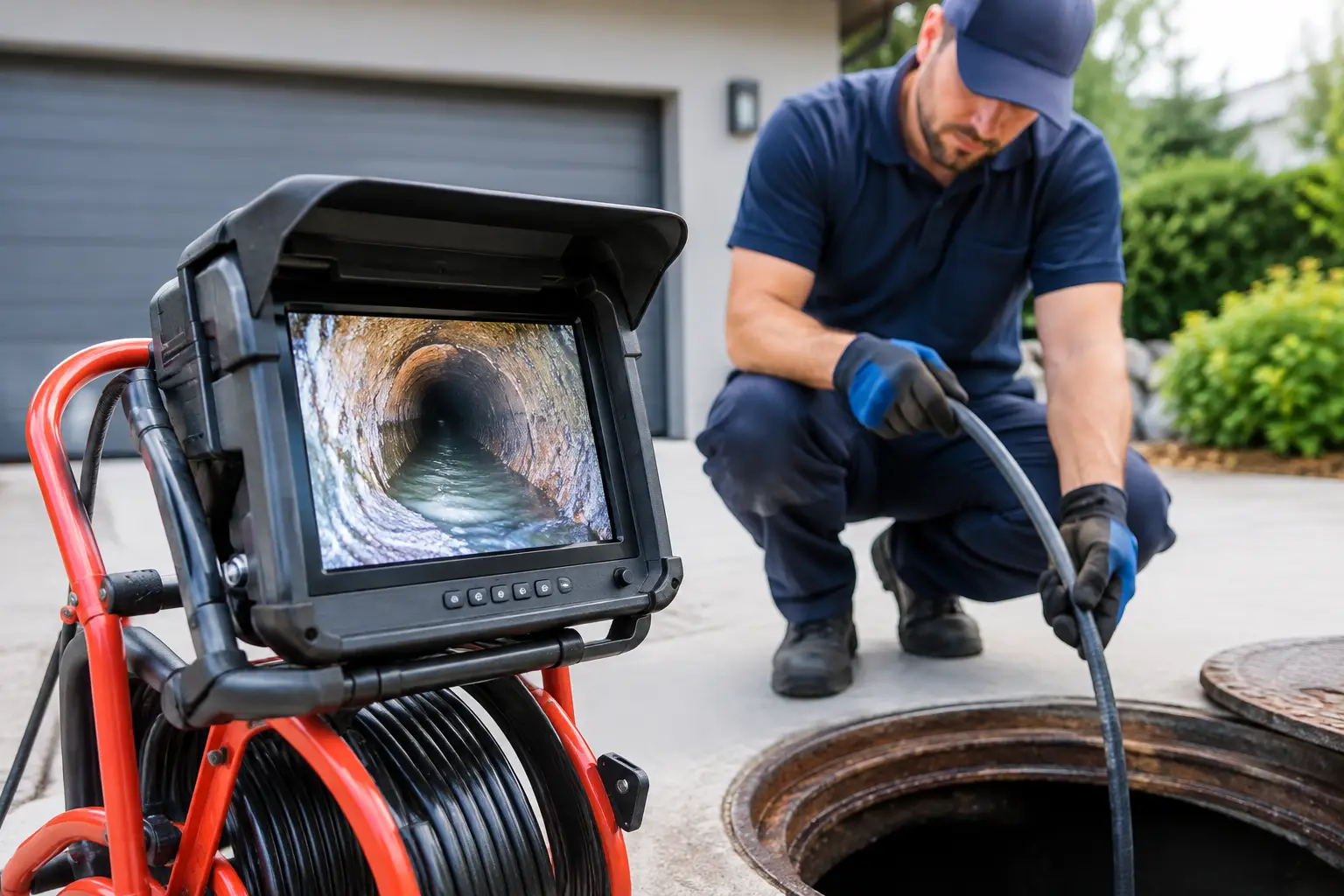
A sewer problem rarely starts with a dramatic flood. It often starts with one slow bathtub, a toilet that gurgles after flushing, or a recurring backup that seems to clear just long enough to cause trouble again. Proper sewer diagnostics replace assumptions with visual evidence, showing what is happening inside the line before a property owner approves a repair, excavation, or replacement.
For Houston homes and commercial properties, that clarity matters. Underground pipe issues can disrupt daily life, damage flooring and walls, interrupt business operations, and lead to expensive repairs when the actual cause is missed. A camera inspection helps identify the condition and location of a problem so the next step is based on facts, not guesswork.
What Sewer Diagnostics Actually Reveal
Sewer diagnostics use a specialized waterproof camera that travels through the plumbing line. A trained technician monitors real-time video as the camera moves through the pipe, documenting visible defects, obstructions, and changes in pipe condition. A locator can then help identify the problem area from above ground.
This process is useful because many sewer failures look alike from inside a building. A slow drain may be caused by a simple blockage, but it can also point to root intrusion, a sagging pipe section, a broken connection, or a line that has shifted out of alignment. Clearing a blockage may restore flow temporarily without addressing the condition that caused it.
A camera inspection can reveal several common conditions:
- Root intrusion entering through joints, cracks, or damaged pipe walls
- Broken, cracked, crushed, or separated sewer lines
- Pipe bellies where a low section holds water and waste
- Heavy buildup, grease, scale, or other material restricting flow
- Offset or misaligned joints that catch debris and create repeat clogs
- Construction debris or foreign objects inside the line
The camera does not fix the pipe by itself. What it does is establish an accurate starting point. That can prevent a plumber, contractor, or property owner from treating the wrong section of pipe or recommending more digging than the situation requires.
When a Sewer Camera Inspection Makes Sense
A full backup is an obvious reason to inspect a sewer line, but it is not the only one. Repeated symptoms are often the strongest signal that a hidden condition needs attention. If the same drain clogs after cleaning, several fixtures drain slowly at once, or toilets and tubs make unusual sounds, the main line may be involved.
Homeowners should also consider an inspection before major repairs. If a plumber recommends replacing a sewer section, camera footage provides useful documentation of the defect and its location. It helps the homeowner understand the recommendation and gives everyone involved a clearer repair target. Clear video is one way to keep your plumber honest while making sure a real problem is not overlooked.
For buyers of older homes, a sewer inspection can be a practical part of due diligence. Many properties have aging cast iron, clay, Orangeburg, or older PVC lines that may have defects below ground despite appearing fine from the street. A standard home inspection may identify warning signs, but it typically cannot see the inside of the buried sewer line.
Commercial properties have additional reasons to act early. A restaurant may be dealing with grease buildup. A multifamily property may have recurring backups caused by a damaged main line. An office, retail space, or warehouse may need documentation before opening a slab or disrupting operations. In these cases, knowing the exact pipe condition helps teams plan work around tenants, customers, staff, and operating hours.
Why Location Matters as Much as the Problem
Finding a blockage is useful. Finding its exact location is what makes repairs more controlled.
Without accurate locating, a repair crew may need to make an educated guess about where to dig. That can mean opening landscaping, driveways, flooring, or concrete in the wrong place. With camera footage and surface locating, the repair team can focus on the affected area rather than exploring the entire run of pipe.
This is especially valuable in Houston, where sewer lines may run beneath landscaped yards, patios, driveways, foundations, parking areas, and active commercial spaces. The least disruptive repair is not always possible, particularly when a pipe is badly damaged or difficult to access. Still, diagnostics give the repair team a better chance to choose the right method from the beginning.
The right next step depends on what the inspection finds. A small root intrusion may call for cleaning and ongoing maintenance. A separated joint may need a targeted repair. Extensive deterioration, repeated collapses, or multiple bellies may justify replacing a longer section. The point is not to push every issue toward the biggest repair. It is to match the scope of work to the actual condition of the line.
What Happens During Sewer Diagnostics
The inspection process is straightforward and usually far less disruptive than people expect. Access is often gained through a cleanout, though the best entry point depends on the property and plumbing layout. The camera is fed through the line while the technician watches the live image and records key findings.
A good inspection looks beyond whether water is moving at that moment. Flow can appear normal even when roots are starting to enter a joint or when a pipe belly is collecting debris. The technician is looking for the conditions that can cause future trouble, not just the immediate obstruction.
If an issue is found, the location can be marked from the surface when conditions allow. Property owners can then share the footage and findings with their plumber, contractor, insurer, or project team. That documented evidence is particularly helpful when comparing repair options or coordinating work between multiple parties.
In some situations, a line cannot be fully inspected on the first attempt. Severe blockage, standing water, a collapsed pipe, or limited access can prevent the camera from traveling the full distance. That is still valuable information. If the camera cannot pass a particular point, it may confirm a significant restriction or damaged section that needs further evaluation.
The Cost of Waiting for a Clear Answer
It is understandable to delay an inspection when a drain begins working again. But recurring sewer symptoms tend to return at inconvenient times: during a family gathering, after heavy water use, or in the middle of a business day. Waiting can allow a manageable issue to become a backup, water damage event, or urgent excavation.
Preventive diagnostics are often less expensive than emergency decisions. They give owners time to gather information, compare repair approaches, schedule work intelligently, and protect the areas around the pipe. For commercial operators, early documentation can also reduce unexpected downtime and help maintenance budgets stay more predictable.
That does not mean every slow drain requires a camera inspection. A single localized fixture problem may be resolved with a routine drain service. The case for diagnostics becomes stronger when multiple fixtures are affected, problems repeat, the building is older, or there is reason to suspect the main sewer line.
Choosing an Inspection Partner
Camera equipment matters, but the value comes from how the findings are interpreted and documented. The goal is not simply to receive a video file filled with dark pipe footage. You need a clear explanation of what was observed, where it was observed, and what it means for the property.
AA Camera Inspections provides specialized camera inspections and utility locating for Houston-area residential and commercial properties. The focus is simple: identify hidden pipe conditions accurately, minimize unnecessary disruption, and give property owners useful evidence before they commit to repair work.
If your drains keep sending the same warning, do not wait for a backup to force the decision. A clear look inside the line can turn an uncertain plumbing problem into a practical plan.
