
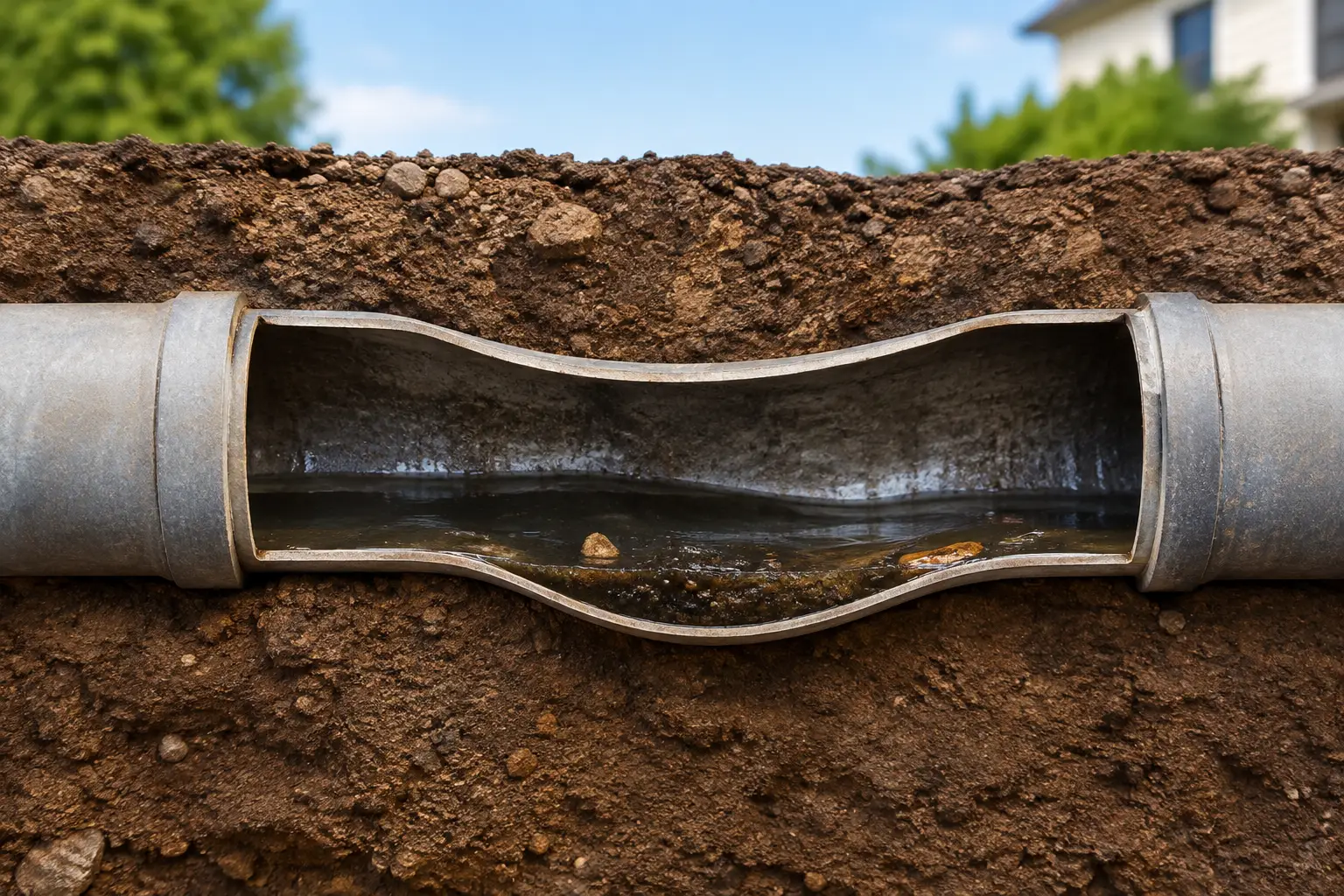
A sewer line can look perfectly normal from the surface while a low spot underground is collecting wastewater, paper, grease, and debris. When homeowners ask what causes a belly in a sewer line, the short answer is a section of pipe has sunk or lost its proper slope. The more useful answer is finding out why it sank, how much water is holding there, and whether the condition is creating an active backup risk.
A sewer belly is not always an immediate emergency. But it is never something to ignore, especially when slow drains, recurring clogs, sewer odors, or wastewater backups are already part of the picture. A camera inspection provides real visual evidence of the pipe’s condition so repairs can be based on the actual problem, not assumptions.
What Is a Belly in a Sewer Line?
A properly installed sewer line needs consistent downward grade so gravity can carry wastewater from the building to the city connection or septic system. A belly, sometimes called a sag, is a sunken section that creates a low point in that line.
Water may remain in the low area after the rest of the pipe drains. Solids that should move through the line can settle there instead. Over time, that standing water and debris can restrict flow, catch additional material, and turn a minor drainage issue into a recurring blockage.
A camera traveling through the pipe may show pooled water, sediment, or a visible dip in the line. The inspection can also reveal related concerns, including cracks, separated joints, roots, or pipe misalignment near the sag.
What Causes a Belly in a Sewer Line?
Most sewer bellies are tied to movement below the pipe, not something happening inside your home. Houston-area soil conditions can be a major factor. Clay soils expand when wet and shrink during dry periods, creating movement that can affect buried utilities over time. A pipe that was correctly positioned years ago can lose grade as the soil around it shifts.
Poor Compaction During Installation
When a trench is backfilled, the soil supporting the pipe needs to be properly compacted. If loose fill settles after installation, part of the sewer line can drop with it. This is common in newer construction, recently remodeled properties, and areas where underground work was completed without adequate bedding or compaction.
The pipe may remain intact at first, but the change in elevation is enough to hold water. If settlement continues, joints can separate or the pipe can crack under uneven pressure.
Soil Movement and Erosion
Soil does not stay still. Heavy rain, drought cycles, poor drainage, leaking water lines, and groundwater changes can alter the support around a sewer pipe. Erosion may wash away fine soil beneath the line, leaving a void that allows the pipe to sag.
This is one reason a sewer concern should not be treated as a simple clog until the line is inspected. Clearing a blockage may restore flow temporarily, but it does not correct a pipe that no longer has stable support.
Aging or Deteriorated Pipe Materials
Older sewer lines can deteriorate, shift, or lose alignment as materials age. Cast iron can corrode from the inside, creating rough surfaces that hold debris. Clay tile and older concrete pipe can crack or separate at joints. Orangeburg pipe, used in some older properties, may deform or compress as it breaks down.
Age alone does not prove there is a belly. However, an older line is more likely to have multiple conditions at once, such as a low spot combined with root intrusion or joint separation. A complete camera inspection helps distinguish between these problems.
Improper Original Slope
Sometimes the line did not have adequate slope when it was installed. A sewer pipe that is too flat can leave solids behind even if there is no obvious dip. A pipe installed with inconsistent grade can have one or more low sections where wastewater slows down.
This is particularly relevant after additions, bathroom remodels, rerouted plumbing, or new construction. The repair approach depends on the location and extent of the grading issue. A short area may be corrected with targeted excavation, while a longer run may require replacement and proper regrading.
Heavy Loads Above the Pipe
A driveway, parking area, construction equipment route, or repeated vehicle traffic can place pressure on buried pipe, particularly when the line is shallow or poorly supported. The weight does not always crush the pipe immediately. It can compact surrounding soil unevenly and contribute to a gradual sag.
Commercial sites may face additional risk from delivery vehicles, dumpsters, paving work, or site changes that increase surface loads. Before digging or building near buried utilities, locating lines and understanding their depth can prevent expensive surprises.
Nearby Excavation or Utility Work
Work near a sewer line can disturb the soil that supports it. Excavation for irrigation, electrical service, drainage, foundations, fencing, or another utility can create movement around existing piping. Even if the sewer pipe is not directly hit, disturbed soil may settle later.
This is why documenting underground pipe condition before major construction can be valuable. If a drainage problem appears afterward, a pre-work inspection provides a clear baseline.
Signs a Sewer Belly May Be Affecting Your Property
A belly does not always cause a dramatic backup right away. Many property owners first notice repeat symptoms that seem to return after drain cleaning. Toilets may gurgle, tubs may drain slowly, or lower-level fixtures may back up when several fixtures are used at once.
Watch for patterns rather than one isolated slow sink. A single fixture issue may be a local drain problem. Multiple slow drains, recurring main-line clogs, sewage odors, or wastewater appearing at a cleanout point more strongly suggest a problem in the main sewer line.
Commercial properties may see the issue as repeated restroom closures, floor drain backups, odor complaints, or disruption during busy hours. In these settings, waiting for a full stoppage can mean downtime, cleanup costs, and avoidable disruption to tenants, employees, or customers.
Why a Belly Can Lead to Recurring Clogs
The low spot itself is only part of the problem. Wastewater slows when it enters the sag, and heavier material can settle out. Toilet paper, wipes, grease, scale, and debris have more opportunity to collect. Each partial blockage catches more material, reducing the open path inside the pipe.
Roots can make the situation worse if they enter through a nearby crack or separated joint. They can trap debris at the belly and create a restriction that keeps returning after basic cleaning. A drain machine may punch a temporary opening through the blockage, but it cannot restore the pipe’s grade or repair damaged joints.
That is why visual inspection matters. It separates a one-time obstruction from a physical defect that will continue to cause trouble.
How a Camera Inspection Identifies the Real Issue
A sewer camera inspection places a high-resolution camera into the line through an accessible cleanout or other entry point. The live view shows the inside of the pipe and helps identify where flow is being restricted. Footage can document standing water, accumulated debris, root intrusion, cracks, offsets, and other defects that may be contributing to the problem.
For a suspected belly, the key questions are practical: Where is the low spot? How long is it? Is the pipe holding water? Are there breaks, roots, or separated joints nearby? How far is the condition from an access point or structure?
Camera findings can be paired with locating equipment to identify the pipe’s position from above ground. That information helps plumbers, property owners, and project teams plan targeted work instead of excavating blindly. AA Camera Inspections provides this kind of evidence-focused diagnosis so the next repair decision is based on what is actually underground.
A camera can clearly show a sag and its related damage, but repair planning may also require depth information, pipe material details, or additional evaluation by a licensed plumber. The right solution depends on the severity of the belly and the overall condition of the line.
Repair Options Depend on the Severity
A minor belly with no recurring blockage may be monitored, especially if the pipe is otherwise in good condition and drains reliably. That decision should be made carefully, with documented footage and a clear understanding of the risk.
When a low spot is holding significant water or repeatedly collecting debris, excavation and regrading are often the most direct repair. The affected section can be removed, the trench base rebuilt with proper support, and new pipe installed at the correct slope.
Trenchless options may be appropriate for some damaged sewer lines, but they are not a universal fix for a belly. Pipe lining can seal cracks and joints, yet it generally follows the existing shape of the pipe. If restoring gravity flow is the goal, the sag itself may still need to be corrected. A trustworthy diagnosis should explain that trade-off before any repair method is selected.
If slow drains or repeat backups keep returning, do not settle for another temporary clearing without seeing the condition of the line. A timely camera inspection can pinpoint the cause, protect your property from a larger sewer failure, and give you a clear path to the right repair.
