
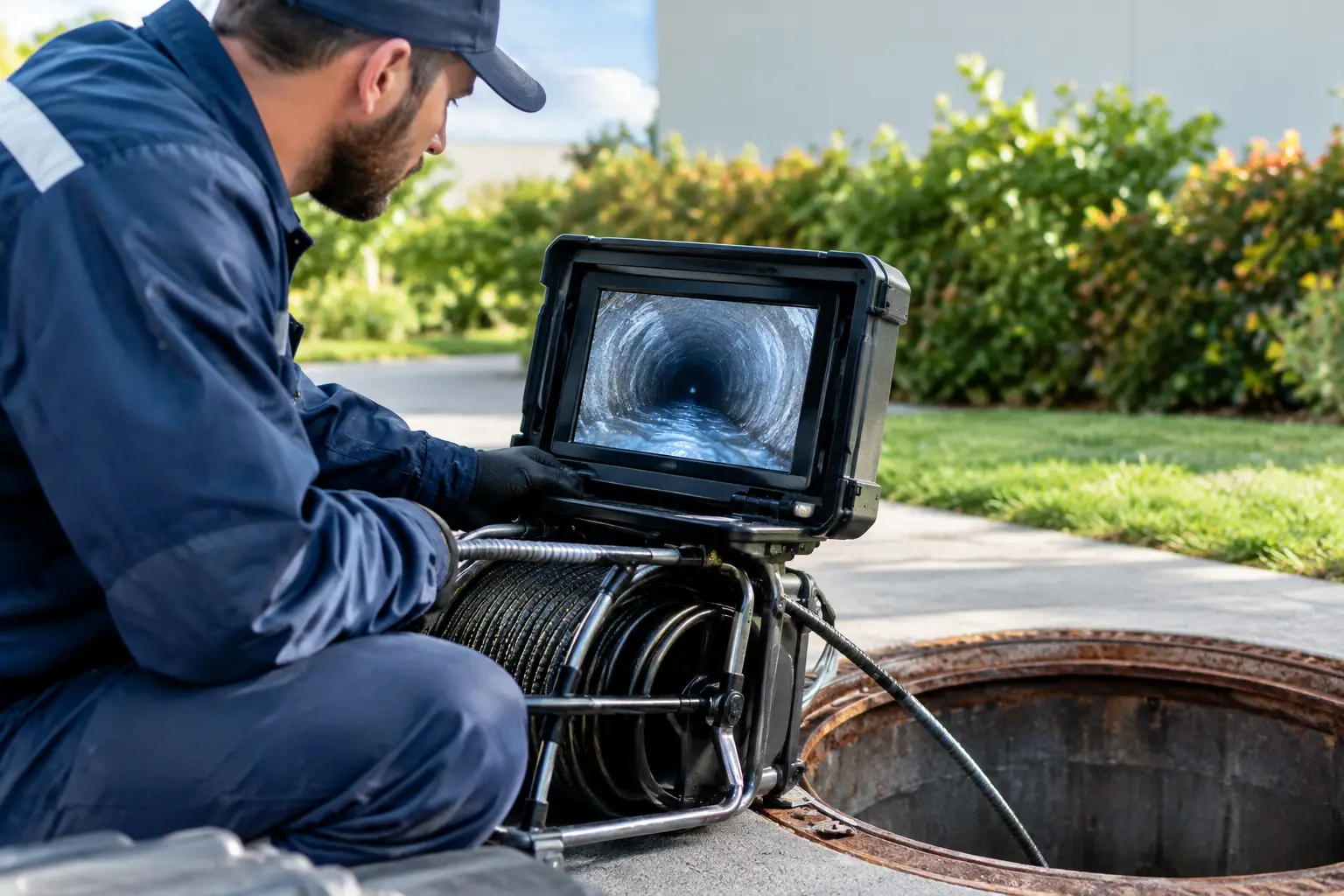
A sewer problem rarely starts with a dramatic collapse in the yard. More often, it begins with a toilet that bubbles, a drain that slows down again a week after being cleared, or a smell that does not belong in the house. A main sewer line camera inspection replaces speculation with a live view inside the pipe, helping Houston property owners see what is actually causing the trouble before they approve a repair.
That matters because the main sewer line is hidden, but the cost of getting its diagnosis wrong is not. Unnecessary digging can damage landscaping, driveways, flooring, or business operations. A camera inspection helps identify the condition, location, and likely severity of a problem so the next step is targeted instead of guessed.
What a Main Sewer Line Camera Inspection Reveals
A trained technician feeds a high-resolution, self-leveling camera through an accessible cleanout or drain opening. As the camera travels through the line, it sends real-time video to a monitor. The technician can observe the inside of the pipe, trace the route of the line, and identify defects that cannot be confirmed from surface symptoms alone.
The footage may show a simple blockage, but it can also expose a condition that snaking or hydro jetting alone will not solve. Root intrusion, cracked pipe, offset joints, separated sections, collapsed areas, heavy scale buildup, and pipe bellies all affect how wastewater moves through the system. Knowing which issue is present changes the repair decision.
For example, roots may be cut or cleared to restore flow, but repeated root growth around a damaged joint often points to a line that needs repair. A belly – a low spot where the pipe has settled – may hold water and waste even after the line has been cleaned. A camera makes that difference visible.
The Signs It Is Time to Inspect the Main Line
One slow sink does not always mean the main sewer is failing. It could be a localized clog near that fixture. Trouble in multiple drains, however, deserves closer attention. When toilets, tubs, showers, and floor drains begin acting up together, the shared main line becomes a likely source.
A camera inspection is especially useful when you notice recurring backups, sewage odors, gurgling fixtures, water collecting near a cleanout, or drains that keep slowing down after conventional clearing. It is also a practical first step before an expensive sewer repair, a slab-related plumbing project, or a major renovation.
Houston properties face conditions that can put extra pressure on underground lines. Mature trees can send roots toward small openings in older pipes. Soil movement may shift or stress buried connections. Older homes may still have aging cast iron, clay, or Orangeburg pipe that has reached the point where visual confirmation is smarter than repeated temporary fixes.
For commercial properties, the warning signs may look different. A restaurant may experience recurring kitchen drain issues. An office building may have an intermittent backup that disrupts restrooms. A retail center may need to confirm the condition of shared lines before a tenant improvement project. In these settings, downtime and surprise excavation can affect staff, customers, and revenue. A documented inspection creates a clearer maintenance plan.
Why Video Evidence Protects Your Repair Budget
A sewer repair recommendation should be based on what is in the line, not what someone assumes is in the line. Camera footage gives owners, property managers, plumbers, and contractors a common reference point. Instead of hearing that a pipe is “probably broken,” you can see the obstruction, separation, or deterioration for yourself.
That does not mean every image leads to a full replacement. Sometimes the camera confirms that professional cleaning is the appropriate solution. Sometimes it shows that a localized repair can address the damaged section. Other times, widespread deterioration makes a larger rehabilitation or replacement discussion reasonable. The point is to match the scope of work to the actual condition.
This evidence is also valuable when comparing repair options. If two contractors recommend different approaches, footage and location information give you a better basis for asking questions. You can ask whether the proposed repair addresses the exact defect shown, whether there are additional damaged areas, and whether the line has enough remaining service life to justify a spot repair.
AA Camera Inspections is built around that straightforward approach: clear visual findings, accurate locations, and less guesswork before the digging starts. The goal is not to sell an oversized repair. It is to show you what the pipe is telling you.
What Happens During the Inspection
Most inspections begin with a conversation about the symptoms, property history, and accessible entry points. The technician then locates an appropriate cleanout or access point and introduces the camera into the line. The process is generally noninvasive and does not require digging simply to determine what is happening underground.
As the camera moves through the pipe, the technician watches for changes in pipe material, standing water, intruding roots, debris, joint alignment, and structural damage. A locator can often be used above ground to identify the position and depth of a specific concern. That information helps a repair team avoid opening more of the property than necessary.
The exact duration depends on the length and condition of the line, access, and whether the pipe is currently blocked. A heavily obstructed line may need to be cleared before the camera can travel far enough to provide a complete picture. That is not a failure of the inspection. It is useful information: the blockage itself may be the immediate issue, and cleaning followed by a camera pass can reveal whether a hidden defect caused it.
When a Camera Inspection Has Limits
Camera technology is powerful, but it is not magic. If a pipe is packed solid with debris, filled with wastewater, or collapsed completely, the camera may not pass the affected area until cleaning or excavation is performed. The inspection can still document where the camera stopped and what it encountered.
A camera also shows the interior of the pipe, not every condition surrounding it. It may reveal a crack, deformation, or separation, but other testing may be needed when there is a question about leaks outside the pipe or a complex plumbing layout. An experienced inspection specialist should explain what the footage confirms, what it strongly suggests, and what may require another diagnostic step.
That honesty matters. The right answer is sometimes simple cleaning. Sometimes it is a repair. Sometimes the camera identifies a larger problem that needs prompt attention. Good diagnostics make those distinctions clear before a small warning becomes property damage.
A Smart Step Before Repairs, Purchases, or Construction
A main line inspection is not only for emergencies. It can be a sensible preventive measure before purchasing an older property, remodeling a home, adding fixtures, repaving an area near the sewer route, or beginning construction that could affect underground utilities.
For a homeowner, the inspection can reveal whether an older sewer line is serviceable or nearing a costly failure. For a property manager, it can support maintenance planning before a backup interrupts tenants. For contractors and project teams, it provides documentation that helps prevent costly surprises after work has begun.
The best time to understand the condition of a buried sewer line is before wastewater comes back into a home, storefront, or facility. If you are seeing repeat symptoms or preparing for a major property decision, request a camera inspection and get clear evidence of what is below the surface.
