
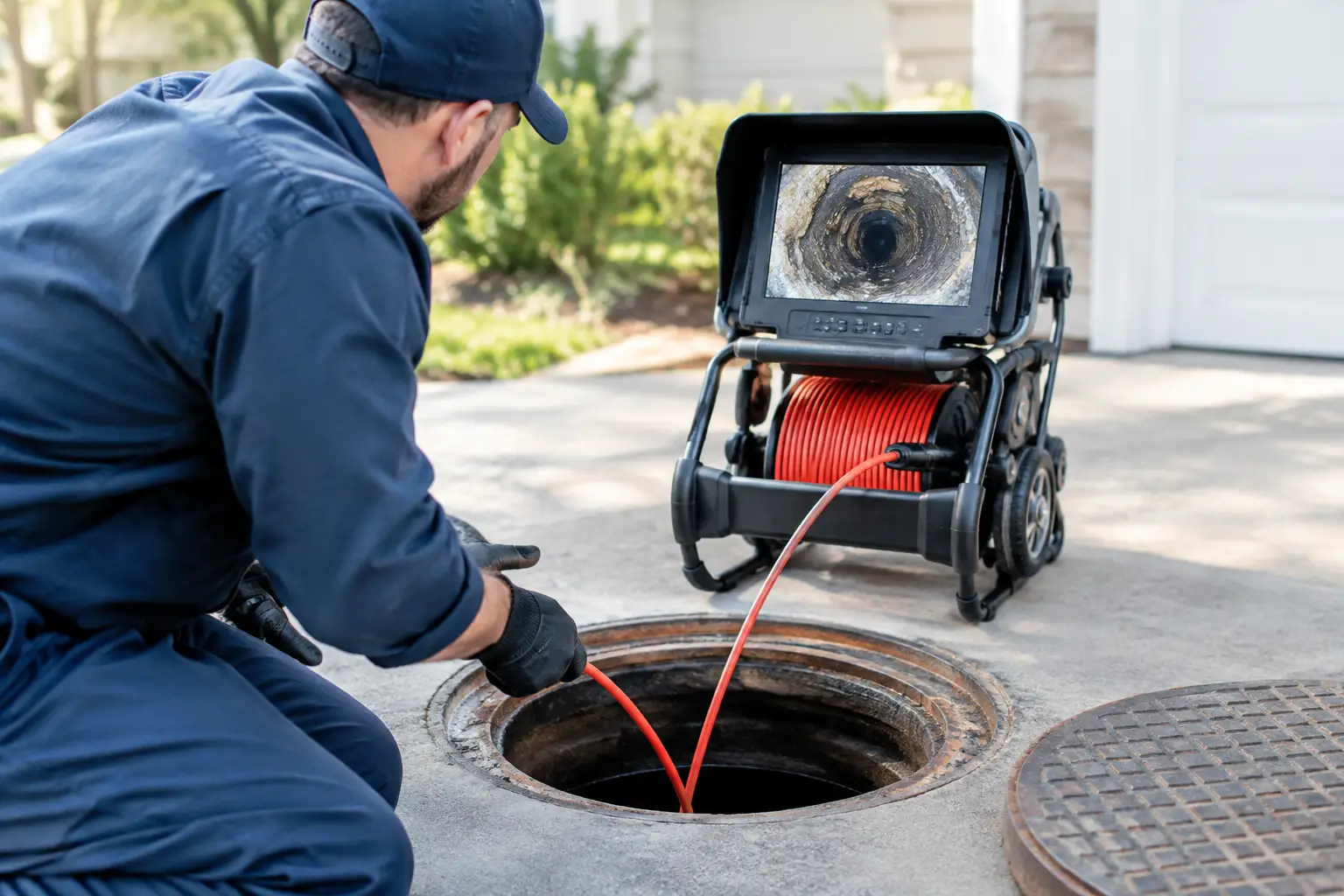
A sewer backup that returns after snaking is not a simple clog until proven otherwise. Camera inspection for recurring sewer backups gives homeowners, property managers, and plumbers visual evidence of what is happening inside the line – and where. Instead of guessing at a buried problem, you can see the condition of the pipe and make a repair decision based on facts.
That matters in Houston, where heavy rain, mature trees, shifting soils, and aging pipe materials can all put pressure on sewer systems. A temporary drain clearing may restore flow for a few days or weeks. If the same fixtures back up again, however, the underlying restriction or pipe defect is still there.
Why Sewer Backups Keep Coming Back
Recurring backups usually mean wastewater is meeting a problem farther down the line than a plunger or standard drain cleaner can reach. The symptom may show up in a shower, toilet, floor drain, or kitchen sink, but the cause can be in a branch line, the building sewer, or the main sewer connection.
Tree roots are a common cause. Roots enter through tiny openings at joints or cracks, then expand inside the pipe where they catch paper, grease, and other debris. Cleaning equipment can cut through roots and reopen the line, but it cannot close the opening where the roots entered. Without a targeted repair or a planned maintenance approach, the backup can return.
Broken, separated, offset, or collapsed pipe sections can create the same cycle. Waste may get through part of the time, then snag at a damaged joint or low spot. A pipe belly – a section that has settled and now holds standing water – can also allow solids to build up. In older homes and commercial buildings, deteriorated cast iron, clay tile, or Orangeburg pipe may have internal damage that is not visible from above ground.
Grease buildup, foreign objects, construction debris, and improperly connected lines can be factors too. The point is not to assume the worst. It is to identify the actual condition before spending money on repeat cleanings or unnecessary excavation.
What a Sewer Camera Inspection Shows
A sewer camera is fed through an accessible cleanout or drain opening and guided through the pipe. A live video feed lets the technician inspect the interior of the line in real time. With the right equipment and a clear path through the pipe, the inspection can show the difference between a one-time blockage and a structural problem.
For recurring sewer backups, the camera can help identify:
- Root intrusion at joints, cracks, or broken pipe sections
- Fractures, separations, offsets, corrosion, and collapsed areas
- Pipe bellies that hold water and restrict normal flow
- Grease, scale, wipes, or debris narrowing the line
- Misaligned connections and changes in pipe material
- The location of a blockage or defect for targeted repair planning
The value is not just the video. It is the ability to connect what appears on screen to a practical next step. A technician can document the location and condition of the issue so your plumber, contractor, maintenance team, or property decision-maker knows what needs attention.
Camera Inspection for Recurring Sewer Backups Prevents Guesswork
When a line backs up more than once, repeated snaking can become expensive without solving the real problem. It may be appropriate when the issue is ordinary buildup and the pipe is otherwise sound. But if a clog returns in the same area, the line deserves a closer look.
A camera inspection helps avoid two costly extremes: digging before the failure location is known, or delaying a necessary repair because the drain happens to be flowing again. Seeing the inside of the pipe allows repairs to be limited to the affected section when possible. It also gives you evidence when a larger repair, replacement, or preventive maintenance plan is the smarter choice.
For commercial properties, this evidence is especially useful. A restaurant, retail center, apartment community, office building, or warehouse cannot afford repeated restroom closures or sewer-related downtime. Video findings can help property managers coordinate repairs, document conditions for ownership, and schedule work before an emergency disrupts tenants or customers.
When to Schedule an Inspection
You do not have to wait for sewage to enter the building. Schedule an inspection when multiple drains are slow, toilets gurgle, water rises in a tub after flushing, or a floor drain backs up during normal use. These signs often point to a problem beyond one fixture.
An inspection is also a sensible next step after a professional drain clearing if the same backup returns. Ask for one when you are considering a major sewer repair, buying an older property, or planning excavation near underground plumbing. For commercial facilities, recurring service calls, unusual odors, frequent grease-line issues, and unexplained drainage interruptions are all good reasons to document the pipe condition.
Heavy rainfall deserves context. Municipal sewer conditions, surface drainage, and private sewer line defects can all contribute to water problems during storms. A camera inspection cannot diagnose every drainage issue by itself, especially if the line is fully blocked or underwater at the time of service. It can still reveal whether the private line has roots, damage, or restrictions that make the property more vulnerable.
What to Expect During the Visit
The inspection process is designed to minimize disruption. The technician first identifies the best access point, often an exterior cleanout. The camera is then advanced through the line while the interior condition is reviewed. If a defect or obstruction is found, locating equipment may be used to identify its position from above ground.
Access and pipe condition affect what can be seen. A line packed with debris may need to be cleaned before a full inspection is possible. A severely collapsed pipe may stop the camera before it reaches the end. Those limitations are still useful findings because they show why the line cannot operate normally and help define what comes next.
Before the appointment, keep the affected fixtures clear if possible and let the inspection team know whether the line has recently been snaked, hydro jetted, or repaired. For commercial sites, share any history of recurring backup locations, operating hours, and access requirements. Better information at the start leads to a more efficient inspection.
How to Use the Findings
Not every camera inspection ends with a major excavation. A line with light scale or manageable root growth may be a candidate for cleaning and scheduled monitoring. A localized break may call for a focused spot repair. Extensive corrosion, repeated separations, or widespread deterioration may make replacement the more cost-effective long-term decision.
The right choice depends on the pipe material, age, depth, access, extent of damage, and how often the backup has occurred. It also depends on the property. A homeowner may prioritize avoiding damage to landscaping or a driveway. A facility manager may need to protect business hours and coordinate work around tenants. Visual documentation makes those trade-offs easier to discuss clearly.
AA Camera Inspections provides the clear evidence needed before repair decisions are made. The goal is simple: find the problem, locate it accurately, and help you avoid paying for work that does not address the cause.
A recurring sewer backup is your plumbing system asking for more than another temporary fix. A timely camera inspection can turn an uncertain, disruptive problem into a documented repair plan – before the next backup causes damage, downtime, or a much larger cleanup.
