
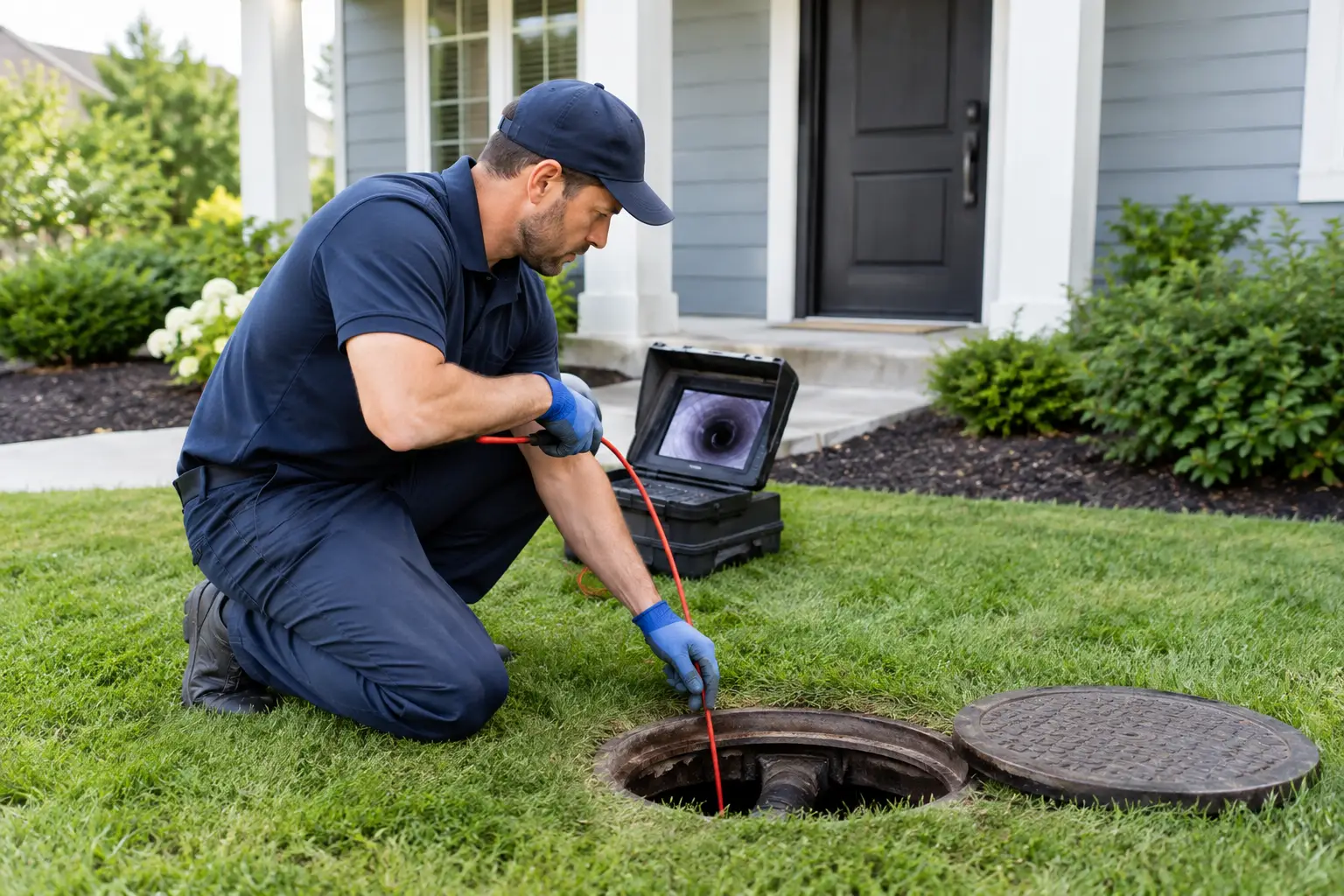
A house can look move-in ready while its sewer line is already failing underground. Scheduling a sewer inspection before buying a house gives you visual evidence of the pipe condition before a hidden defect turns into a backup, damaged yard, or unexpected repair bill after closing.
A standard home inspection may identify slow drains or recommend further evaluation, but it typically does not include running a camera through the main sewer line. That distinction matters. The sewer line is out of sight, and many of its most expensive problems develop where no one can see them.
What a Sewer Camera Inspection Looks For
A sewer camera inspection uses a specialized waterproof camera that travels through accessible plumbing lines. The live feed allows the inspector to see the inside of the pipe, document conditions, and identify where a problem is located. Instead of guessing based on a drain symptom or digging up a yard to investigate, buyers receive clear visual findings.
During a pre-purchase inspection, the concern is not simply whether water is flowing at that moment. A line can drain today and still have defects that are likely to cause trouble once a household begins using showers, toilets, laundry equipment, and dishwashers every day.
Common findings include root intrusion, cracked or broken pipe, separated joints, offset connections, corrosion, heavy scale buildup, pipe bellies, construction debris, and partial blockages. In older Houston-area homes, the pipe material itself can be part of the risk. Cast iron can corrode and deteriorate from the inside, while older clay or concrete lines can shift, crack, or allow roots to enter through joints.
Why a Home Inspection Is Not Always Enough
Home inspectors provide valuable information about a property’s visible systems. They may test fixtures, run water, and note drainage concerns. But a sewer lateral often extends from the house to the city connection beneath landscaping, concrete, driveways, or streets. Its interior condition cannot be confirmed from a surface-level review.
A drain that appears to work during an inspection is not proof that the line is sound. Limited water use may pass through a restricted pipe without creating an obvious backup. A camera inspection can reveal whether the line has a low spot collecting waste, roots narrowing the opening, or a break that has not yet fully collapsed.
This is especially relevant when a home has mature trees, recurring drain issues, a recent drain cleaning, a history of foundation movement, or an older plumbing system. It is also wise when the seller has little documentation about sewer repairs or replacement work.
When to Schedule a Sewer Inspection Before Buying a House
The best time is during the option or inspection period, after the seller accepts the offer and before you are fully committed to the purchase. This gives you time to understand what you are buying and make decisions with real information.
If the inspection identifies a concern, your real estate agent can help you decide how to proceed. Depending on the findings and the terms of the contract, you may request a repair, negotiate a credit, obtain a specialist’s repair estimate, or decide the risk is greater than you want to take on.
A camera inspection does not automatically mean a deal should fall apart. Many sewer issues are repairable. The value is knowing the difference between a minor cleaning need and a line that may require significant excavation, tunneling, lining, or replacement. Evidence gives you leverage and helps prevent an expensive surprise after the keys are in your hand.
Homes that deserve extra attention
Any property can have a sewer defect, including newer construction. Still, a camera inspection is particularly worthwhile when a home is more than a few decades old, has large established trees, sits on expansive soil, has been vacant, or shows signs of prior plumbing work.
Pay attention to clues in disclosures and walk-throughs. Slow sinks, toilets that gurgle, sewer odors, damp areas in the yard, unusually lush grass along a pipe route, and recent drain cleaning invoices can all justify a closer look. None of these signs confirms a sewer failure, but they should not be dismissed as cosmetic or routine without checking the line.
What the Results Can Tell You
A quality inspection should give you more than a verbal opinion. You should understand what was found, where it was found, and how serious it appears to be. Video documentation and clear findings help your plumber, contractor, agent, and seller discuss the same issue rather than relying on assumptions.
A minor blockage or early root intrusion may call for cleaning and planned maintenance. A localized crack may be repairable without replacing the entire line. On the other hand, widespread deterioration, multiple separations, major offsets, or a collapsed section can affect the repair scope and cost substantially.
Pipe bellies deserve careful interpretation. A belly is a low section where water and solids can collect because the pipe no longer maintains proper slope. A small area of standing water does not always require immediate replacement, but a severe belly combined with recurring backups is more concerning. The right next step depends on the pipe material, depth, access, extent of damage, and whether the line is currently functioning reliably.
Protect Your Budget Without Creating Unnecessary Work
The goal of a pre-purchase sewer inspection is not to find reasons to dig. It is to avoid digging unless the evidence supports it. Camera technology helps pinpoint the affected section so repairs can be targeted instead of based on a broad guess.
That can make a major difference in a Houston property where sewer lines may run beneath landscaping, patios, driveways, or a slab foundation. Knowing the approximate location and condition of a defect allows you to seek accurate repair recommendations and compare options. It also helps prevent a small issue from being treated like a full-line replacement when it is not.
There is a trade-off: a camera inspection has an upfront cost, and access to the line may be limited in some homes. In certain cases, an inspector may not be able to view every section because of an obstruction, missing cleanout, or inaccessible connection. Even then, documenting what can be seen is often far better than buying with no information at all.
Questions to Ask After the Inspection
Once the video is complete, focus on practical questions. Ask whether the pipe is flowing, whether defects are isolated or widespread, and whether the condition appears urgent. Ask what material the line is made from, where the problem sits, and whether the camera reached the city connection or the furthest accessible point.
You should also ask what follow-up is appropriate. Some findings call for cleaning and a reinspection. Others need an estimate from a licensed repair professional. If the line shows signs of major failure, request documentation detailed enough to support negotiations and repair planning.
AA Camera Inspections provides documented camera findings that help Houston buyers see concealed pipe conditions clearly before they become their responsibility. That visibility can keep repair discussions grounded in facts, not pressure or guesswork.
Before you remove an inspection contingency, make sure the sewer line has received the same attention as the roof, foundation, and electrical system. A short camera inspection can provide the clarity to buy confidently, negotiate fairly, or walk away before a hidden pipe problem becomes your first major repair.
