
A plumbing sewer problem rarely announces itself clearly. A slow tub, a gurgling toilet, or a backup near a cleanout can point to anything from a simple blockage to a damaged line under the yard. Knowing the residential sewer line inspection cost before approving a repair helps you get visual evidence first – and avoid paying to dig where the problem is not.
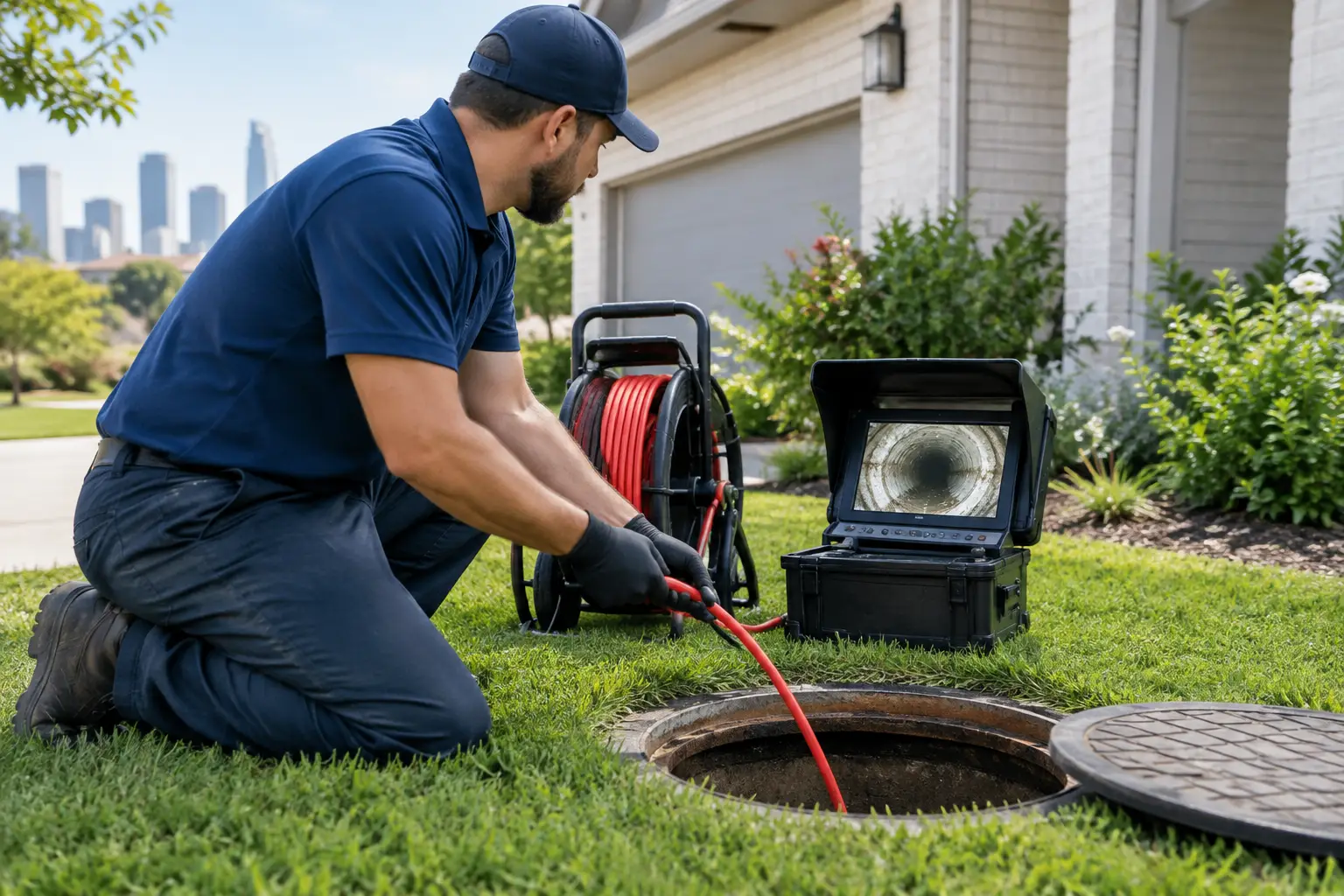
For Houston homeowners, a camera inspection is often the fastest way to turn a plumbing guess into a documented answer. A specialized camera travels through the pipe, showing the line’s condition in real time and helping identify the location and type of problem without unnecessary excavation.
What Does a Residential Sewer Line Inspection Cost?
Most residential sewer camera inspections are priced based on access, pipe length, the complexity of the system, and the condition of the line. A straightforward inspection through an accessible cleanout generally costs less than an inspection that requires locating access points, clearing a blockage first, or evaluating a long line with multiple branches.
The lowest price is not always the best value. An inspection should provide more than a quick look down the pipe. You need a clear assessment of what the camera found, where the issue is located, and what the findings mean for your next repair decision.
A fair quote should make it clear whether the service includes camera time, locating the issue, recorded footage or images when needed, and a practical explanation of the pipe condition. If a plumber recommends major sewer work without showing evidence of the failure, a separate camera inspection can protect you from an expensive repair based on assumptions.
What Changes the Price of a Sewer Camera Inspection?
Every property has a different plumbing layout. A newer home with an accessible exterior cleanout and a clear sewer line is usually simpler to inspect than an older home with buried access, cast-iron piping, recurring backups, or a line that runs a long distance to the city connection.
Several details can affect the final inspection price:
- Access to the sewer line. An exterior cleanout makes it easier to insert the camera. If access is limited or a fixture must be used, the inspection may take longer.
- Blockages and standing water. Heavy buildup, roots, or a complete stoppage can prevent the camera from moving through the line until the obstruction is cleared.
- Pipe length and layout. Longer sewer laterals, multiple turns, and branch lines require more camera work and may require a locator to pinpoint the issue from above ground.
- The need for utility locating. When a defect is found outside, locating its exact position and depth helps a plumber plan a targeted repair rather than opening a larger area.
- Emergency timing. After-hours or urgent service may carry different pricing, especially when a backup is actively affecting the home.
Houston soils, mature trees, and older neighborhoods can add another layer of uncertainty. Clay soil movement may contribute to separated joints or pipe bellies, while tree roots can enter small openings and turn them into repeat blockages. The camera does not just confirm that there is a problem. It shows what kind of problem it is.
Why a Camera Inspection Can Save More Than It Costs
The cost of an inspection is small compared with the cost of digging, tunneling, slab work, or replacing a sewer line that did not need replacement. Camera evidence lets you narrow the repair scope before equipment arrives in the yard or inside the home.
For example, a recurring backup may be caused by root intrusion at one joint rather than a collapsed line. In that case, the next step may be cleaning and monitoring, spot repair, or a discussion about long-term pipe rehabilitation – not automatically a full replacement. On the other hand, if the camera reveals broken pipe, severe offsets, or a belly holding waste and water, you have documentation to support a more significant repair.
That distinction matters when comparing plumbing estimates. Two contractors may recommend very different solutions because they are working from different assumptions. A camera inspection gives everyone a shared view of the line condition. It keeps the conversation focused on the actual defect, its location, and the repair options available.
When Homeowners Should Schedule an Inspection
You do not need to wait for sewage to reach the floor before checking the sewer line. Inspections are useful when a drain issue keeps returning or when a property’s pipe condition is unknown.
Schedule a residential sewer camera inspection if you notice repeated clogs in more than one fixture, toilets that bubble when a nearby drain runs, sewage odors outdoors, wet or unusually green patches in the yard, or slow drainage that keeps coming back after snaking. These symptoms can indicate a main sewer line issue, especially when they affect multiple areas of the home at once.
An inspection is also a smart step before major plumbing repairs, before purchasing an older home, or before starting work that could affect underground utilities. A camera can identify conditions that are not visible from inside the house, including deteriorating cast iron, misaligned joints, root entry, scale buildup, and sections of pipe that no longer maintain proper slope.
What a Good Inspection Should Show You
A quality inspection is not a vague statement that the line is “bad” or “looks okay.” You should come away with clear findings. The technician should be able to explain whether the pipe has restricted flow, roots, cracks, breaks, bellies, separated joints, offsets, or signs of corrosion.
Location is just as valuable as diagnosis. If a problem sits ten feet from the cleanout, the repair approach may be very different from a defect located beneath a driveway, slab, or large tree. Surface locating helps pinpoint the camera head so a plumber or repair crew can plan with less disruption to the property.
The inspection may also reveal good news. If the pipe is structurally sound and the issue is limited to buildup or a minor blockage, you can address the immediate problem without committing to a major project. Accurate information lets you spend where it counts.
Questions to Ask Before You Approve the Service
Before scheduling, ask whether the quoted service includes a full main-line camera inspection and whether the technician can locate defects found outside the home. Ask how the findings will be documented and whether you will receive an explanation of the recommended next step.
It is also worth asking what happens if the camera cannot pass through the line. A severe blockage may need to be cleared first, and that work may be separate from the inspection itself. Knowing this upfront avoids confusion when the pipe condition prevents a complete view.
If you are comparing quotes, do not focus only on the starting price. Compare what each provider is actually inspecting, whether they use professional camera equipment, and whether they can translate footage into an exact repair location. A lower fee that produces no usable diagnosis can lead to more service calls and more uncertainty.
Get Evidence Before You Dig
When a sewer line is hidden underground, visual confirmation is the practical first move. AA Camera Inspections uses specialized camera and locating equipment to identify concealed pipe issues and help Houston homeowners make repair decisions with confidence.
If your drains keep backing up or you have been told you may need sewer work, ask for a clear camera inspection first. Seeing the line can prevent damage, save time, and give you a better basis for choosing the right repair – before a small warning turns into a disruptive emergency.
